City lights
Warm melody and a steady groove. The city keeps moving around a held character, with a little loneliness beneath the late-night glow.
- AwakeningHiroshi Sato
- EstrelarMarcos Valle
MANGA STUDY
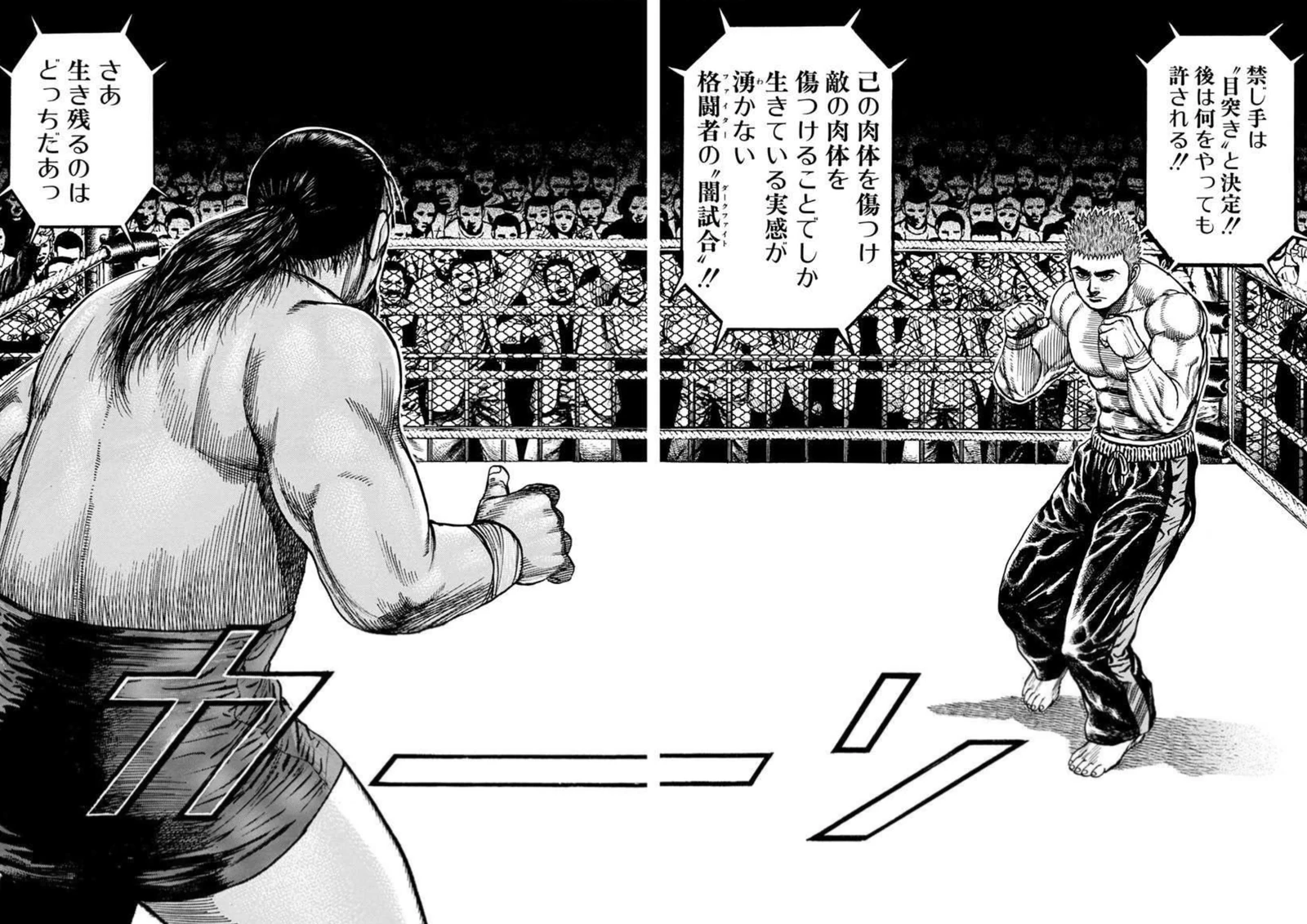
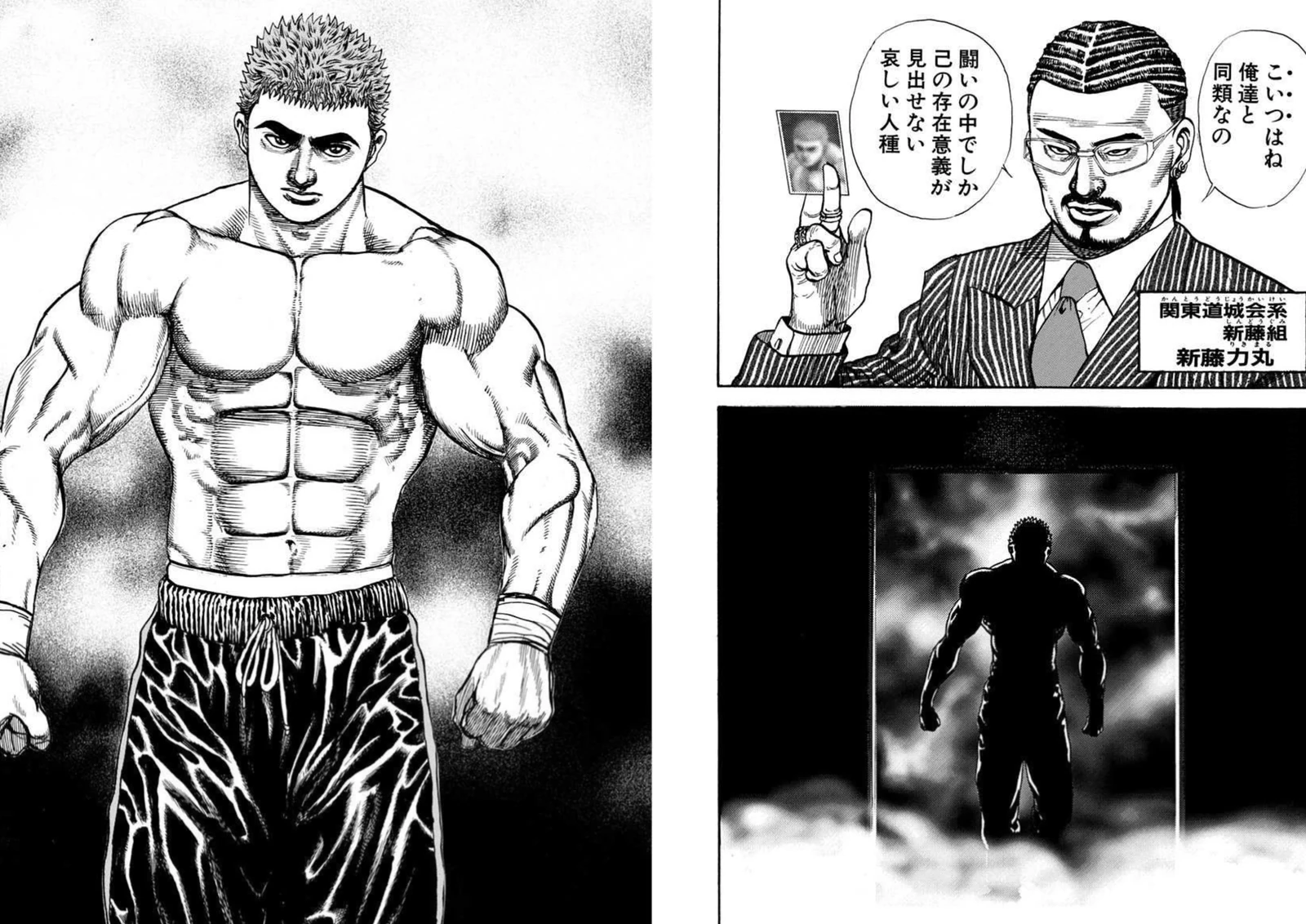
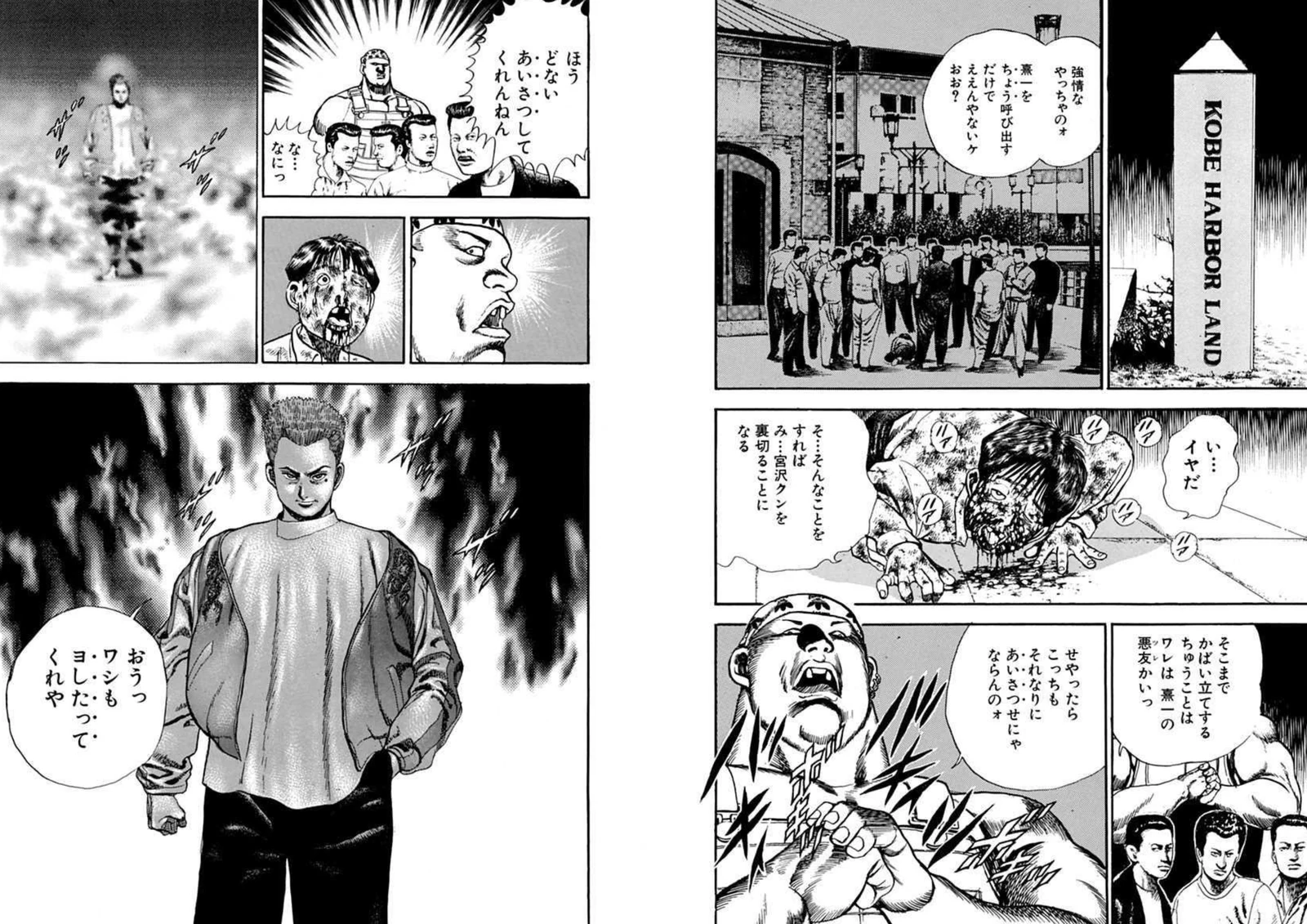
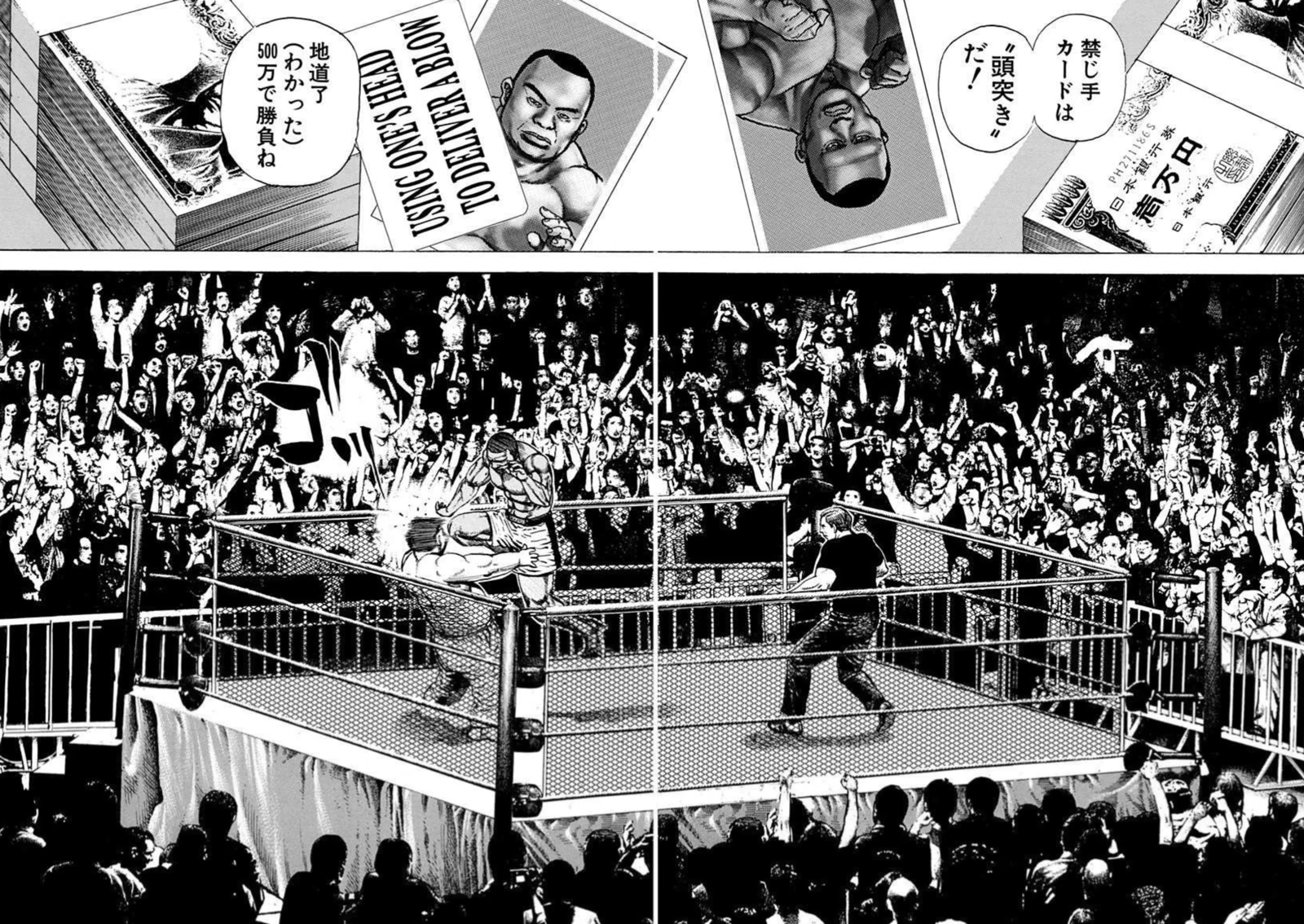
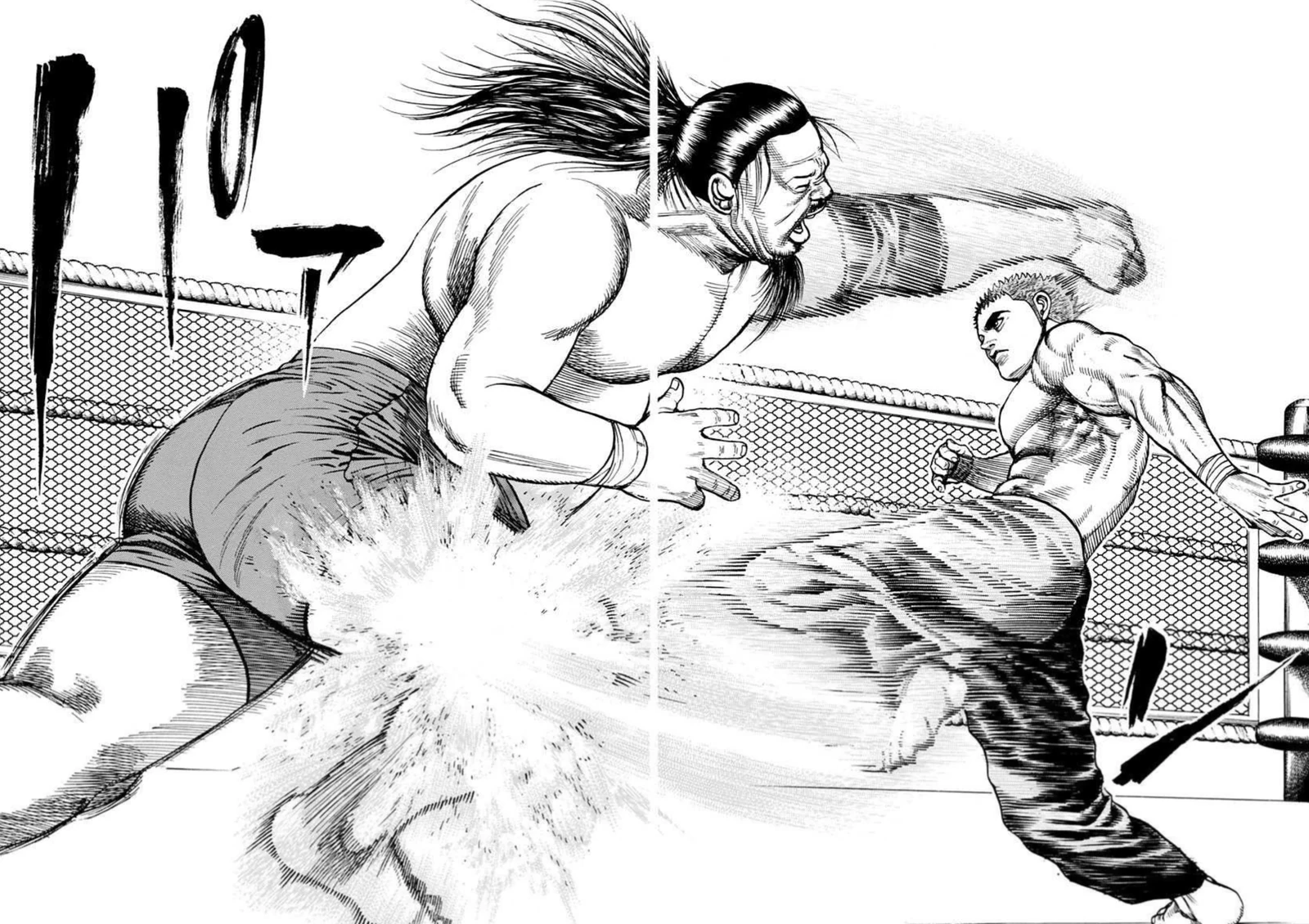
This exploration begins with the supplied manga pages: grounded physicality, expressive faces and action that reads through ink, open space and contrast. We carry that grit into a spare black-and-white animation language, using holds, changes in light and restrained digital texture to let the drawings come alive.
The aim is to preserve the immediacy of the ink drawing while exploring expression, gesture and movement.
We are testing how a limited black-and-white palette and clear silhouettes can support character performance. A glance, a change of pose or a held movement should remain easy to read.
Distortion and texture can respond to shifts in attention or emotion, while the drawing continues to carry the action.
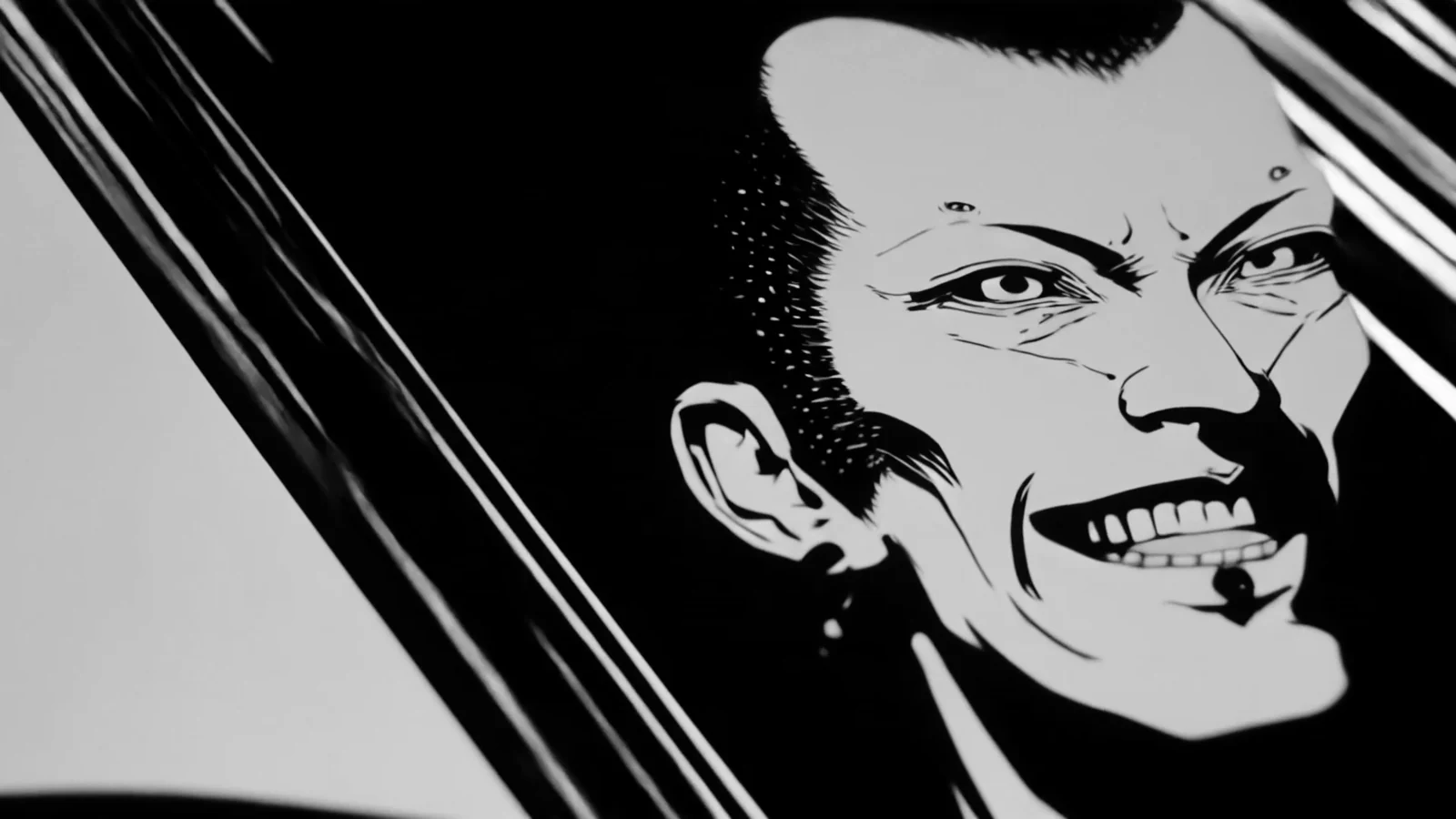
Video preview unavailable. Showing the study still.
We exaggerate the world around the characters: long receding lines, steep floor-level views and near-camera forms that swell in scale. Drawn distortion makes the space feel charged while the figure stays readable.
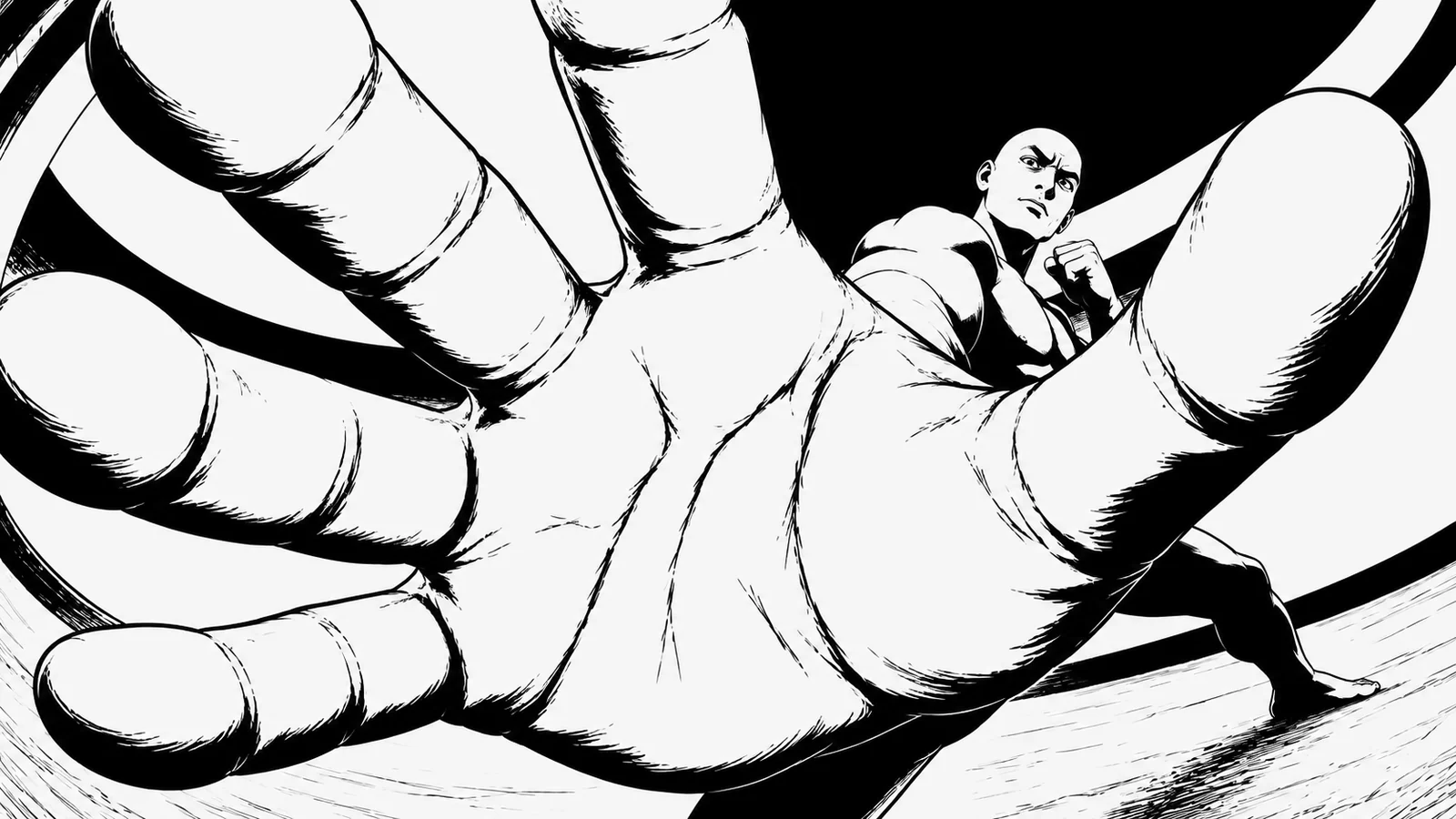
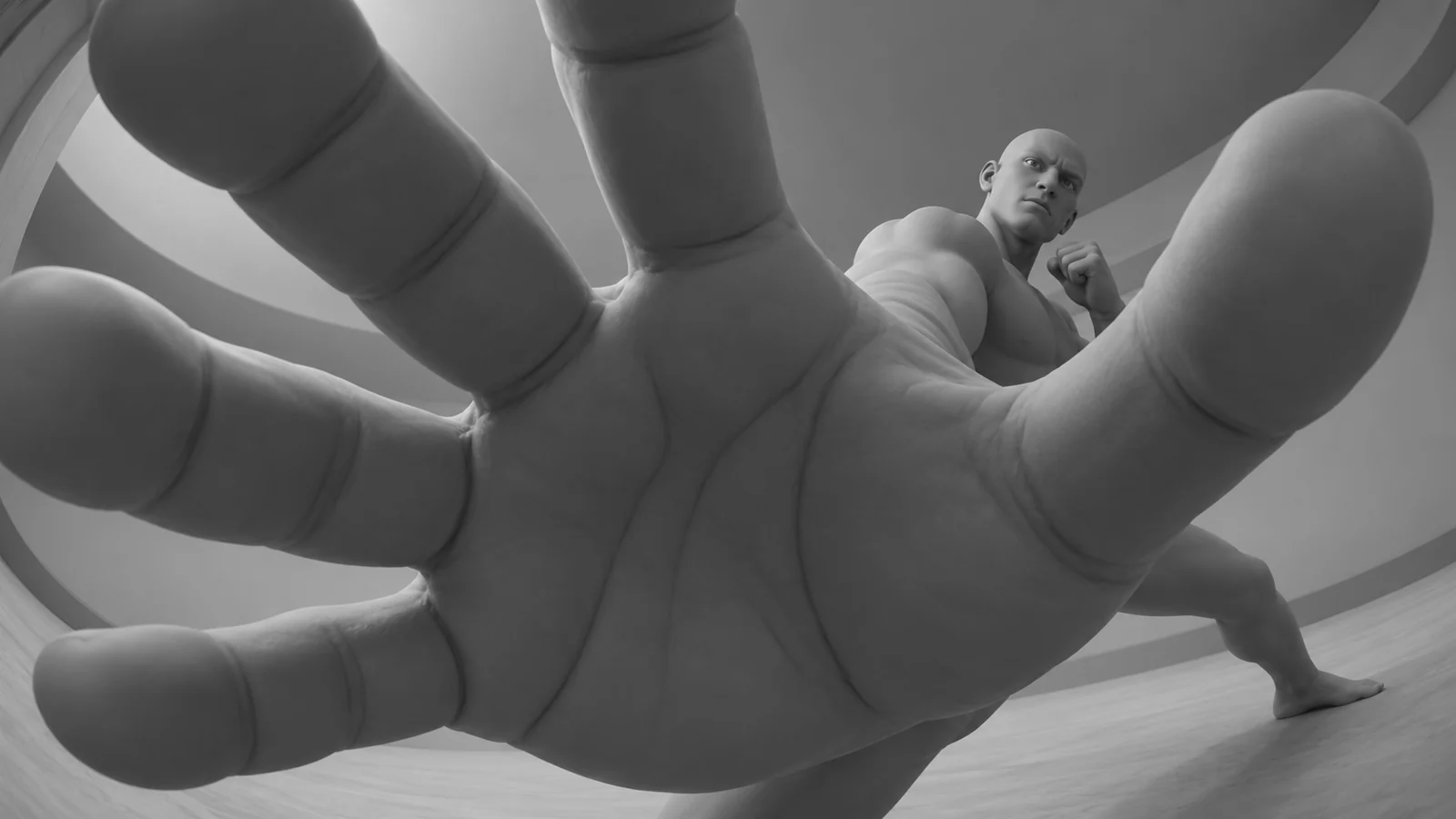
Curved architecture and stretched distances give a flat drawing the sensation of an extreme lens. Depth comes from overlapping shapes, changes of scale and parallax between drawn layers.
The action tests taught us to leave more white around the body. Extreme angles only work when the gesture still reads.
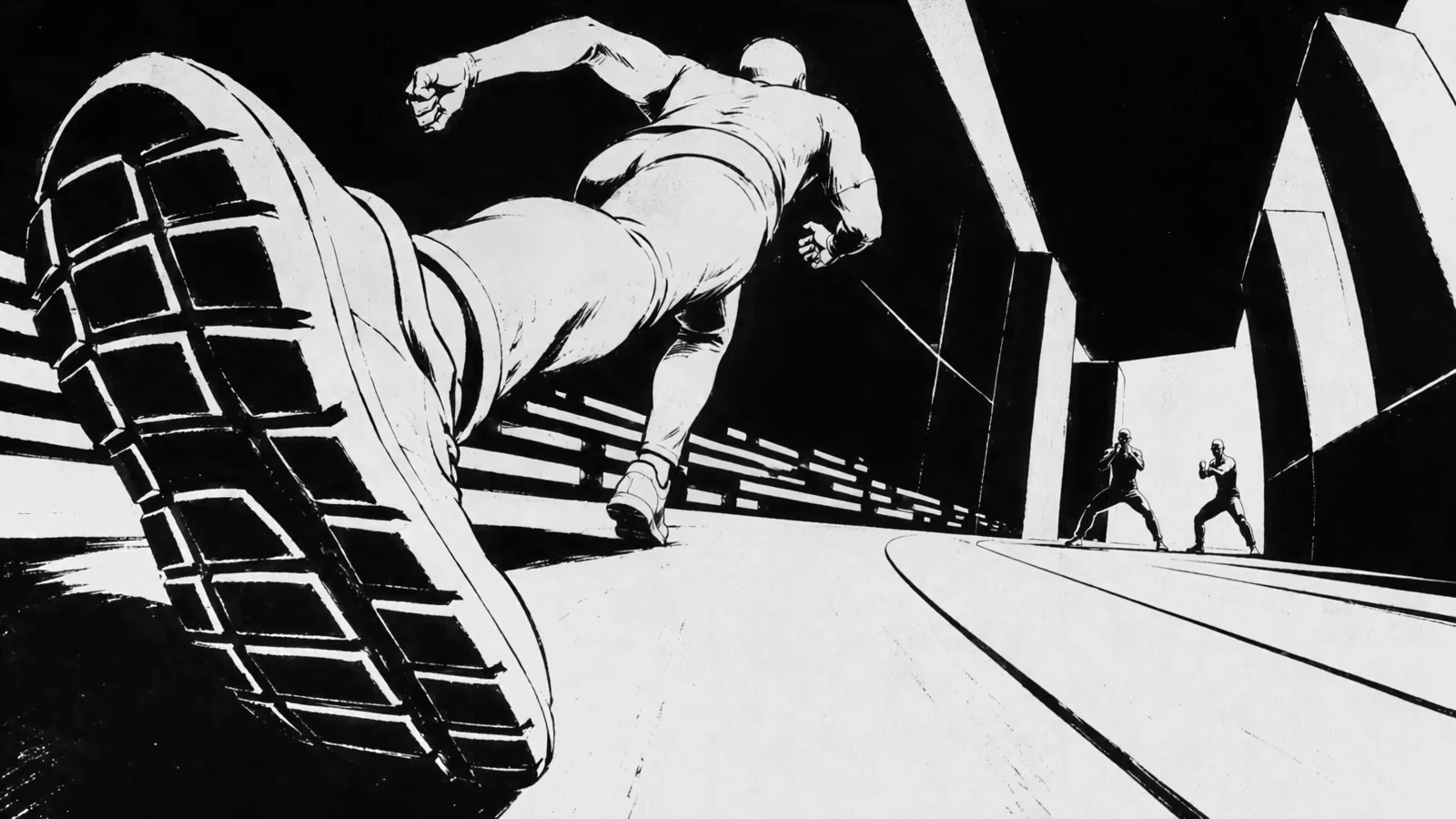
Video preview unavailable. Showing the study still.
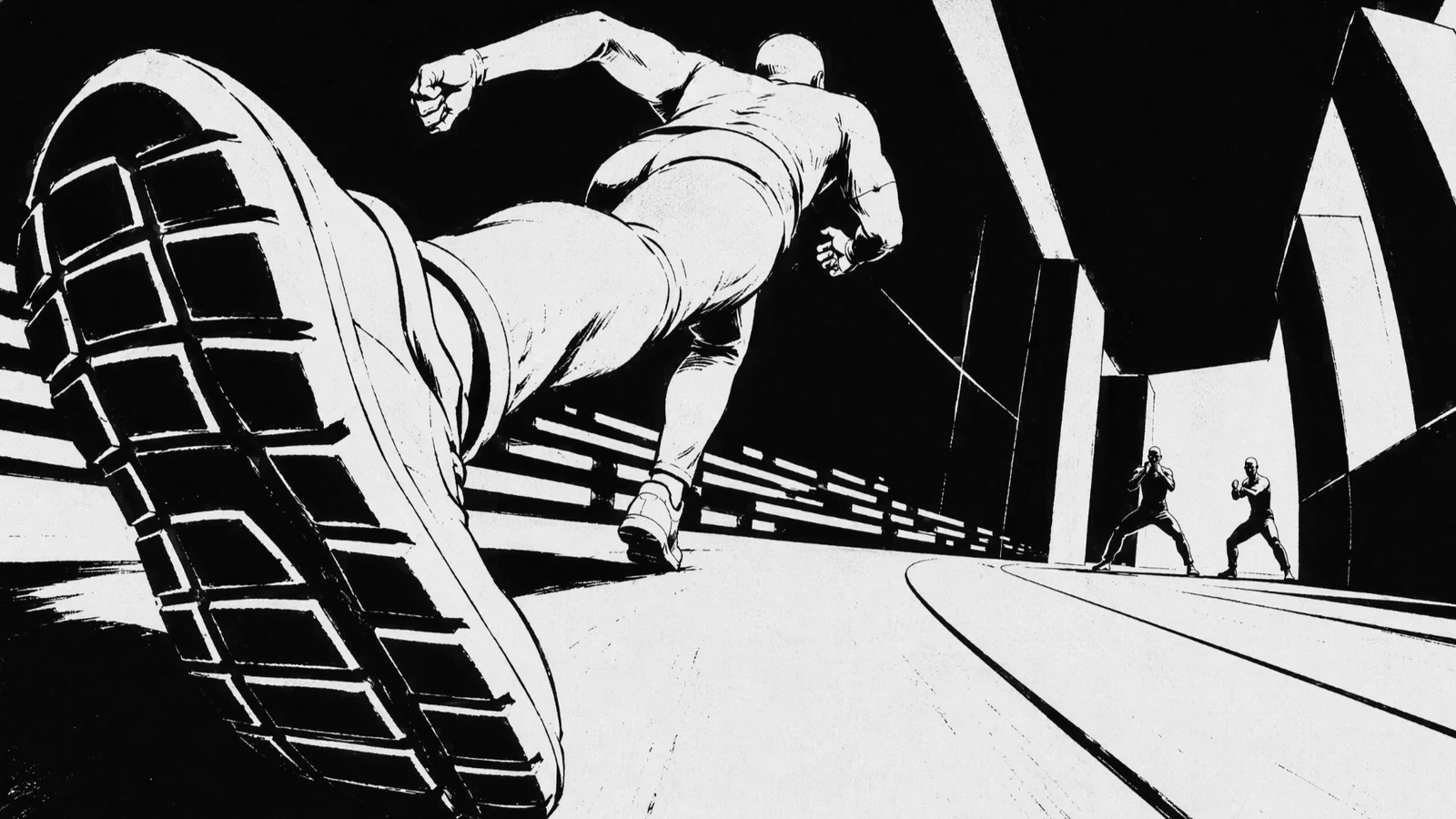
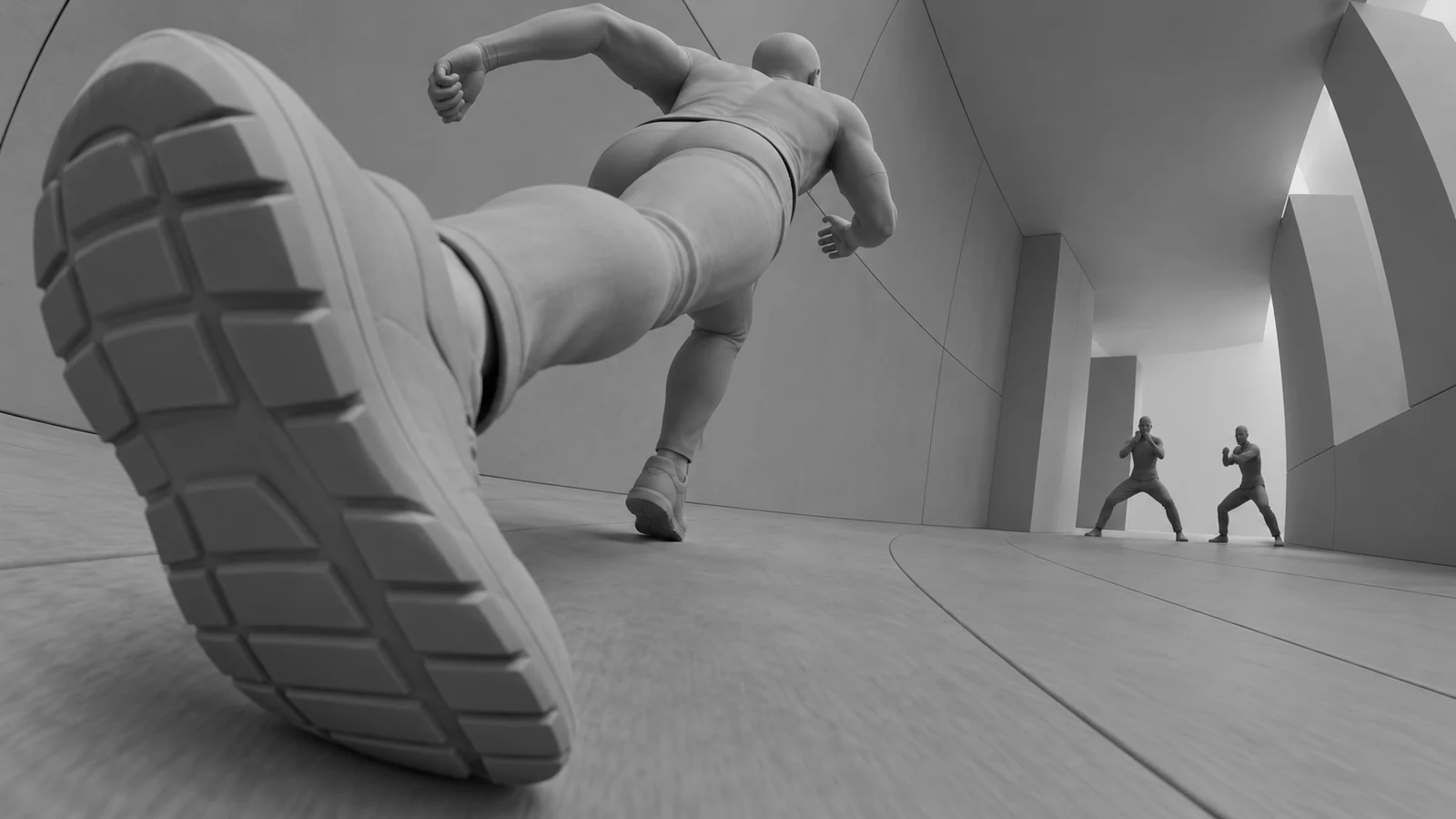
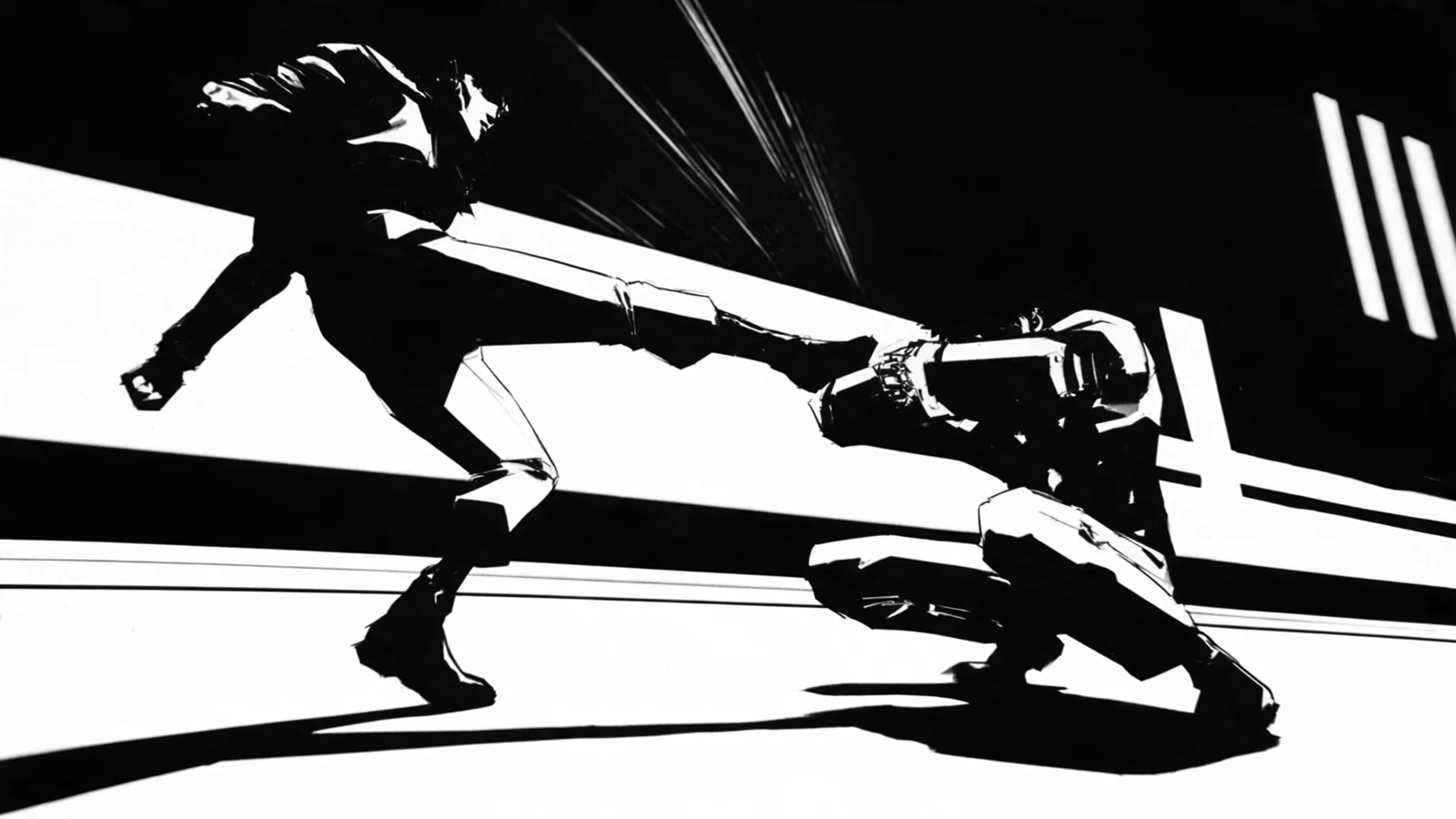
We explored this camera angle in a gray block, then translated it into an ink drawing. This test suggests how we might keep action clear through exaggerated angles, using light, dark and the direction of the drawing.
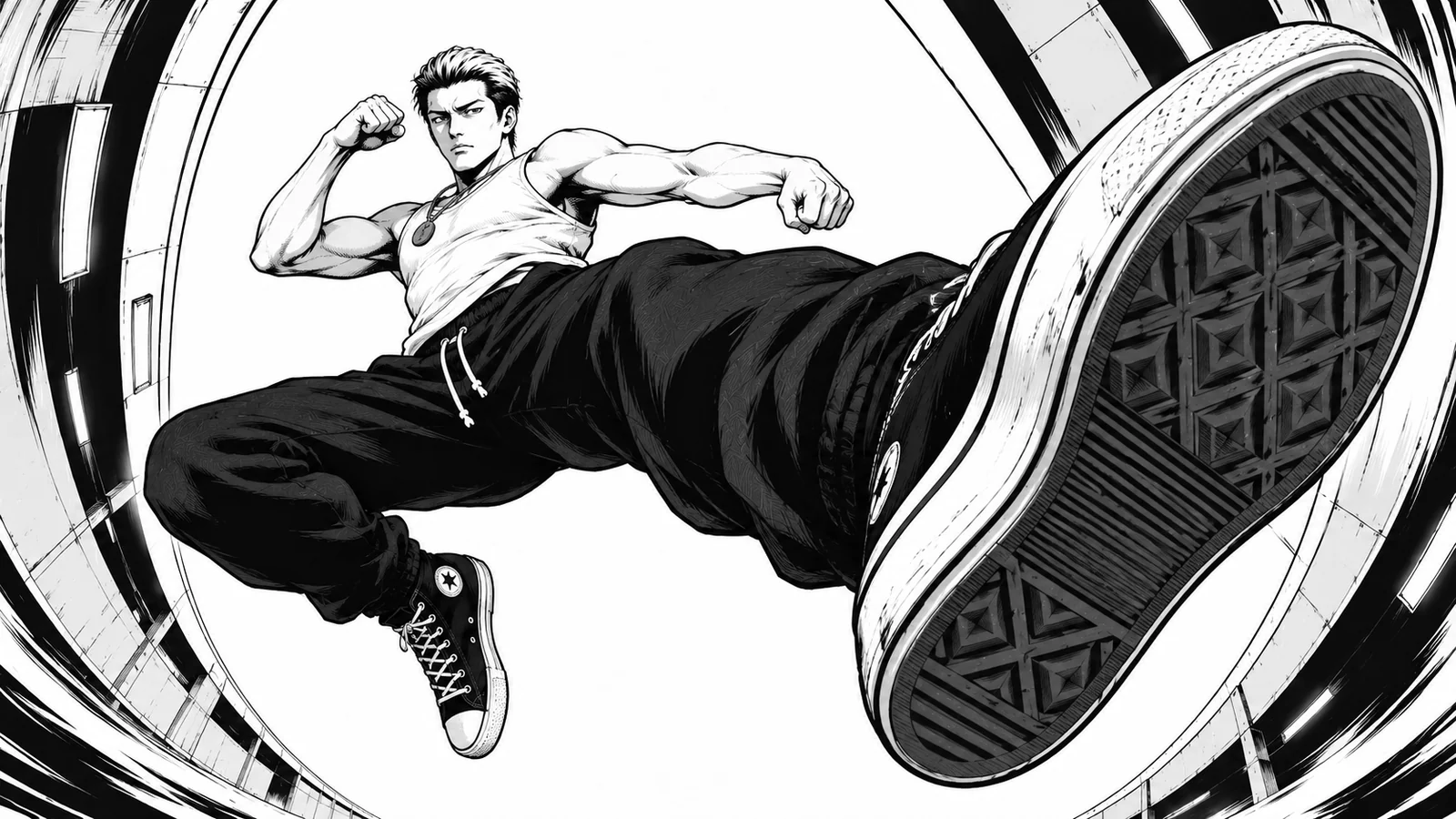
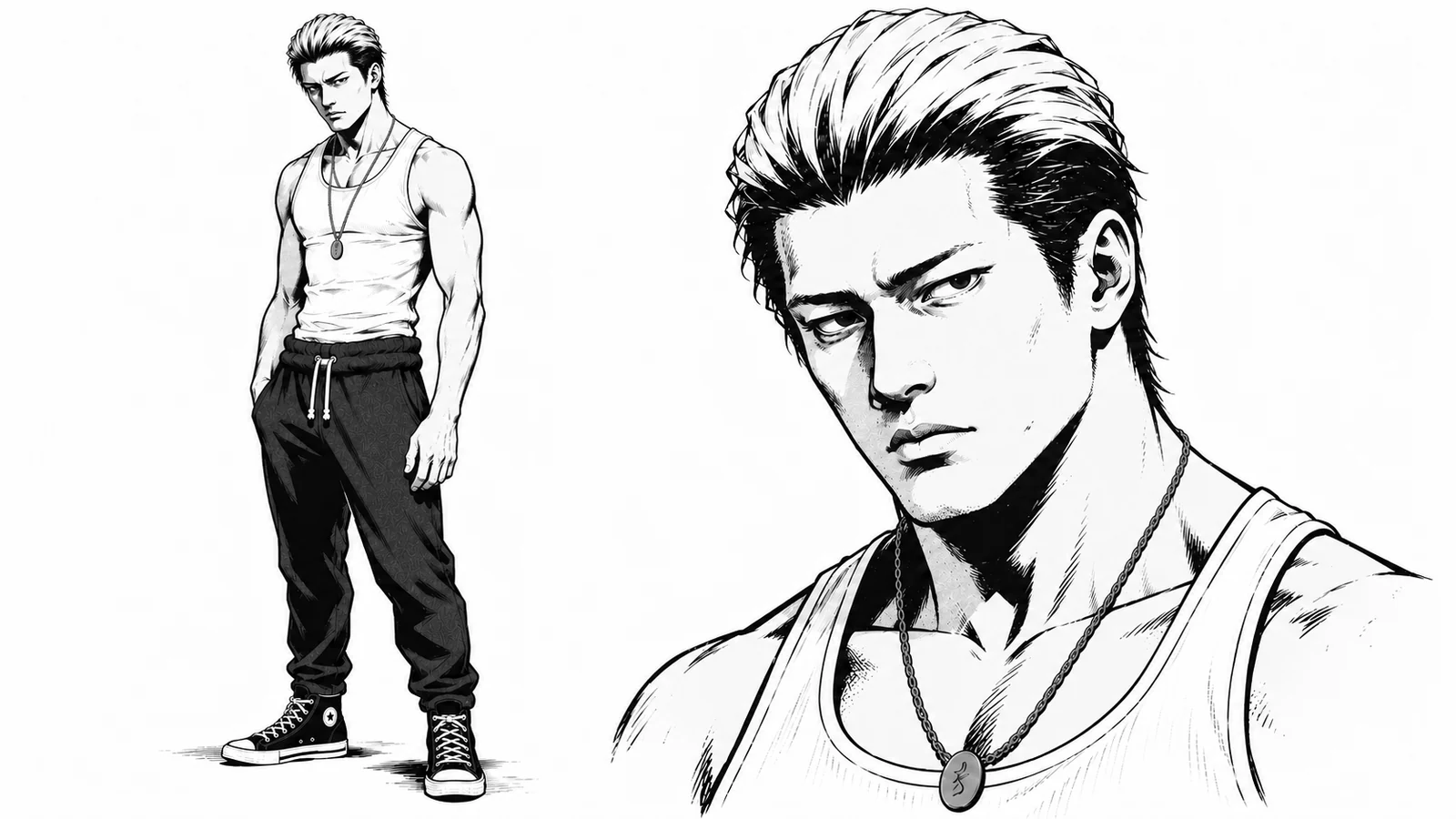
A tall, lean fighter with a grounded physical presence. The silhouette is simple enough to recognize through a held pose, a harsh crop or an exaggerated lens.
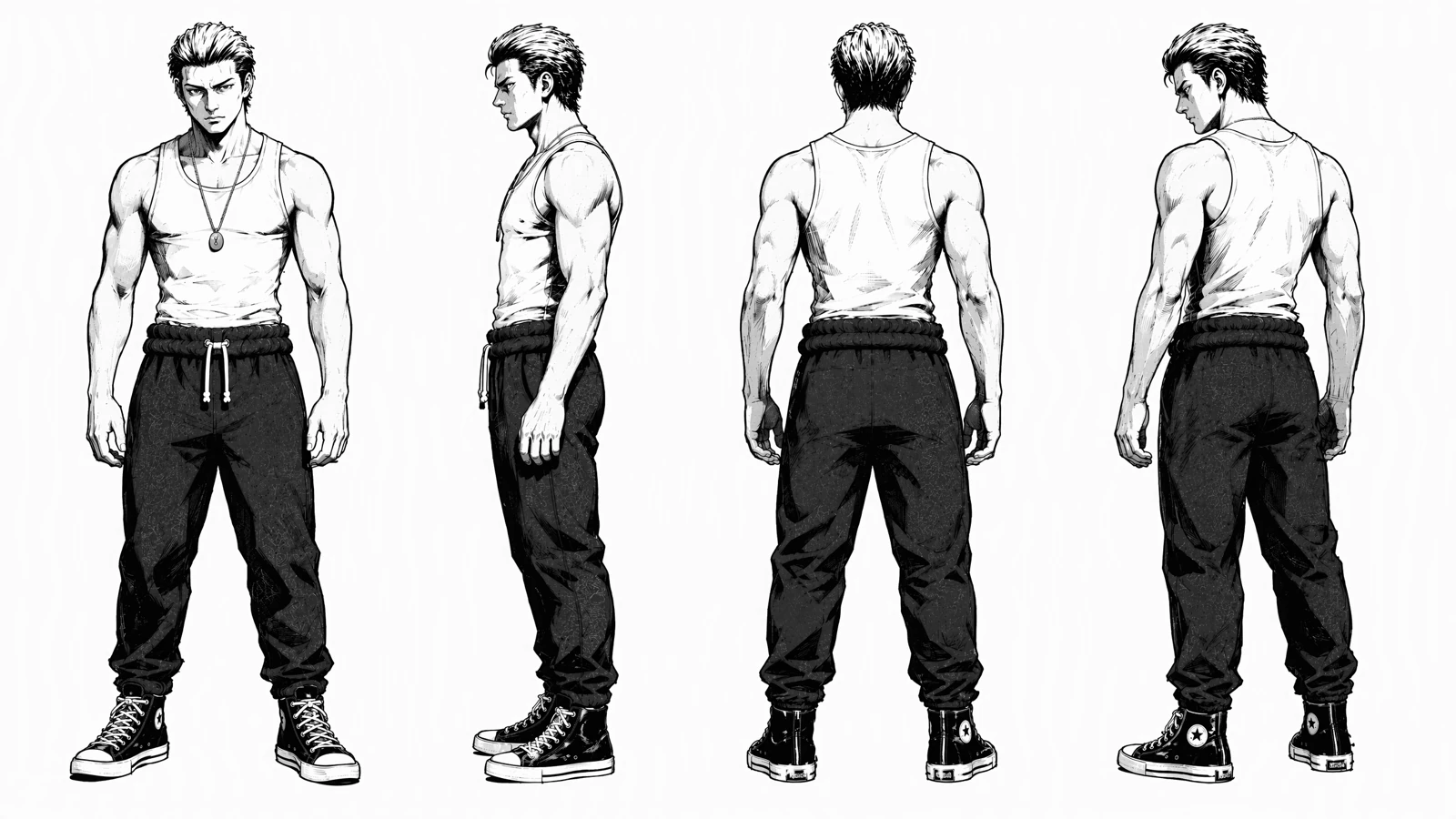
Our timing reference mixes quicker movement on ones and twos with longer held drawings. Character, camera and background can move at different rates.
A kick begins, hangs for a moment, then drives through. The background continues to erase and race past during the hold. The pause makes the next movement count.
Video preview unavailable. Showing the study still.
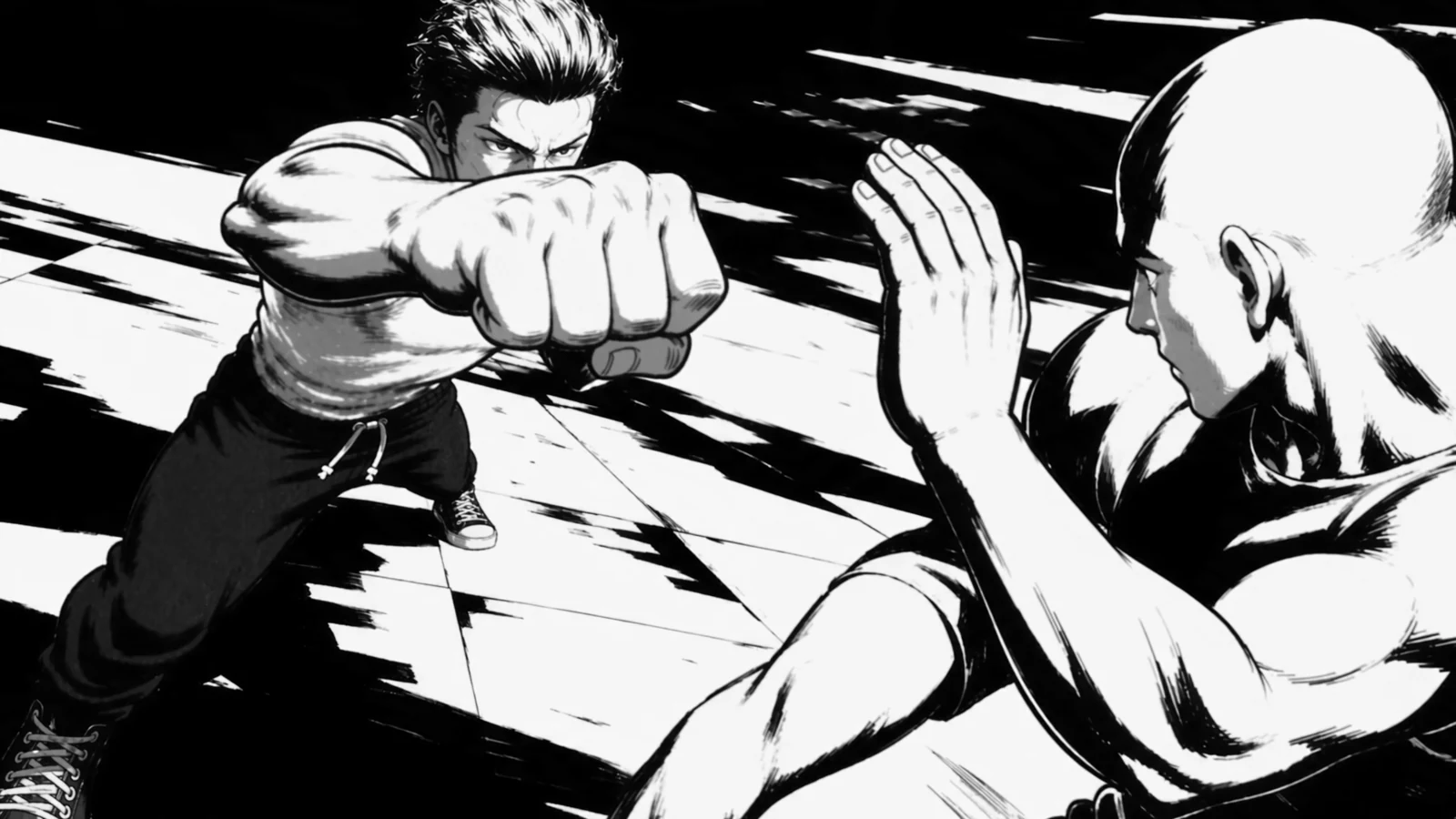
The camera slows around the block, letting the punch hang in an exaggerated perspective before the action releases.
Video preview unavailable. Showing the study still.
A loaded kick, a prolonged beat, then contact. The pause creates room to read the pose and anticipate the strike.
A small, dark figure anchors a huge white eruption. As the camera travels upward, architecture and billowing forms become a graphic field of light, ink and broken marks.
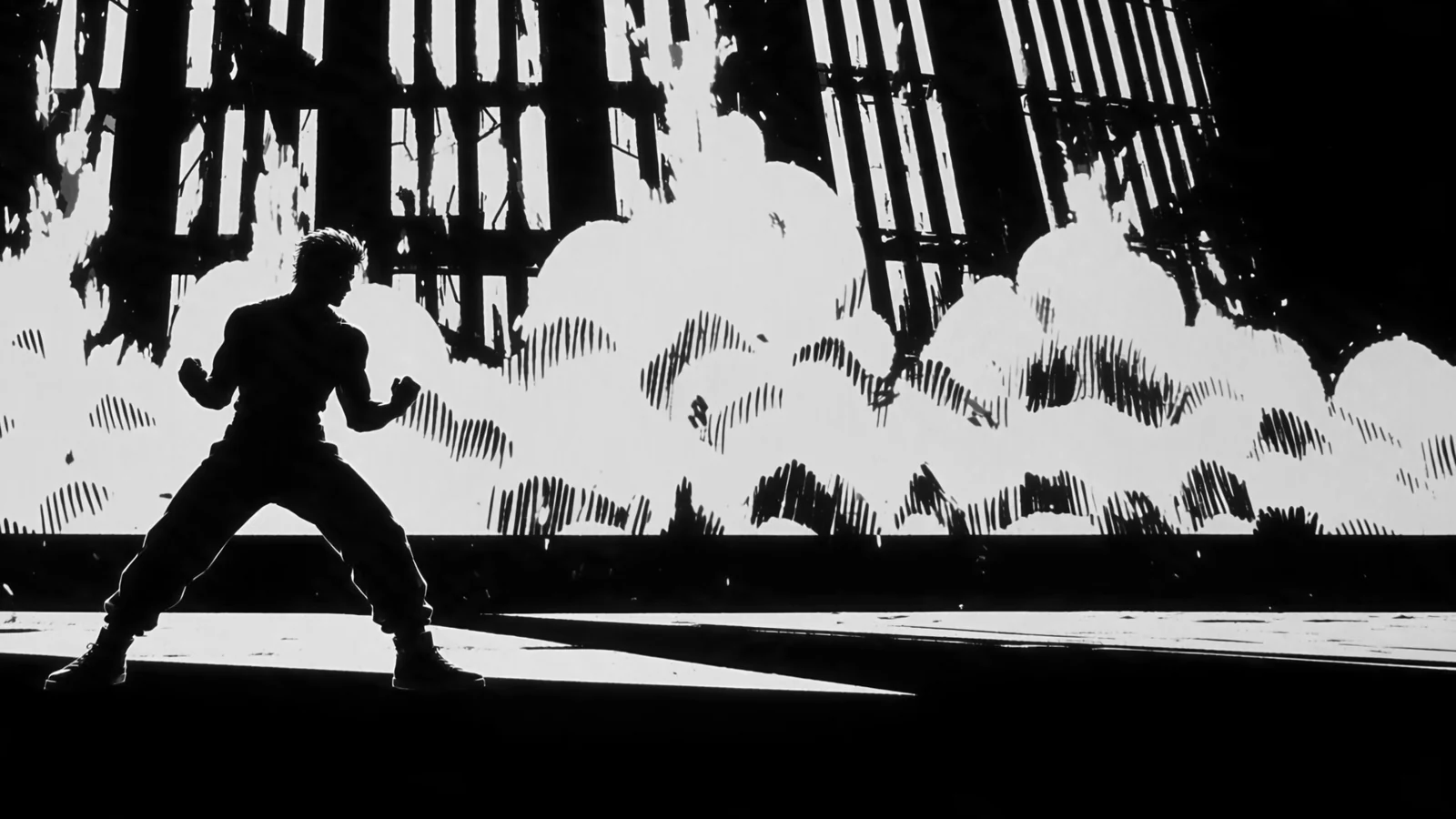
Video preview unavailable. Showing the study still.
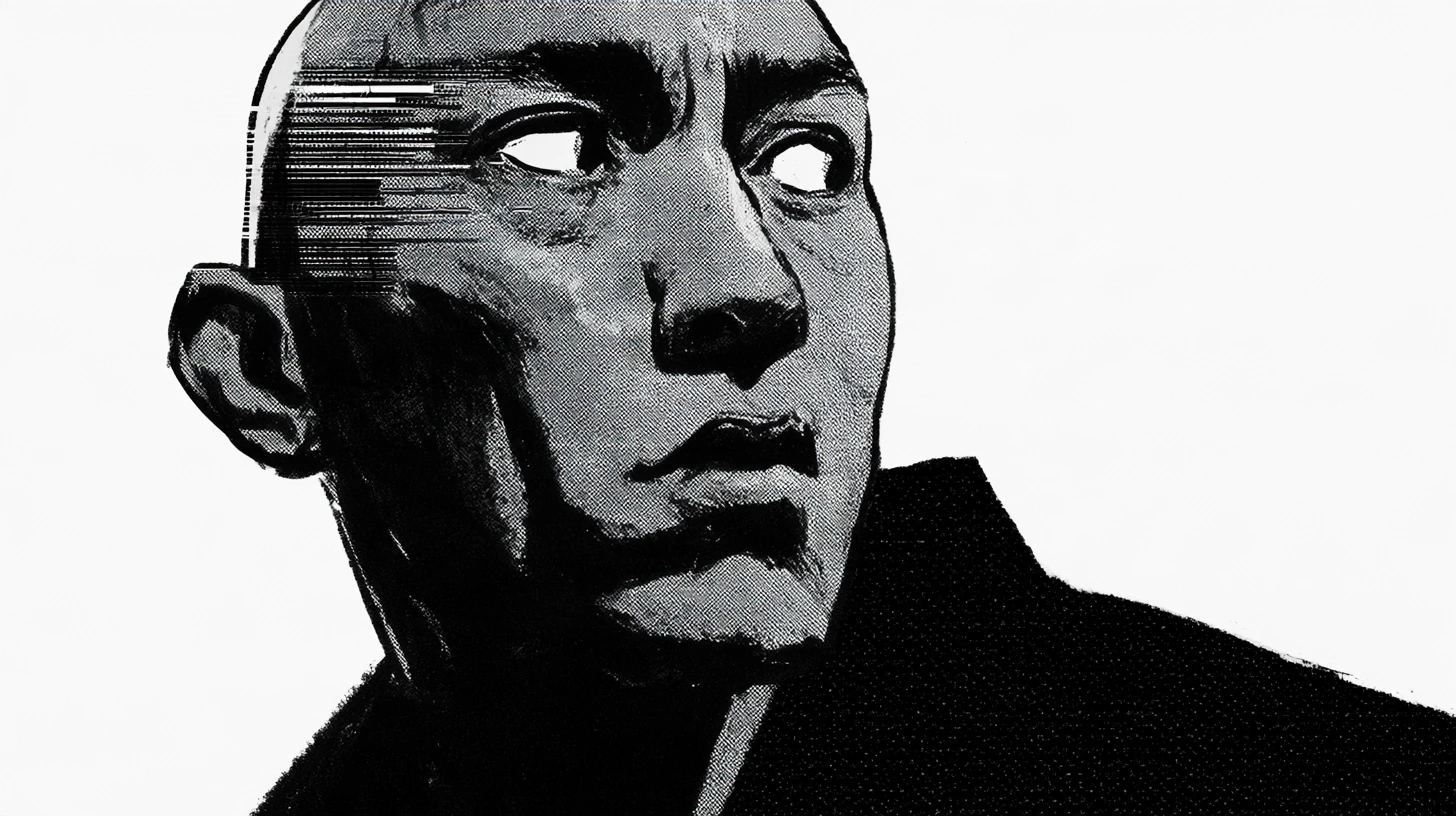
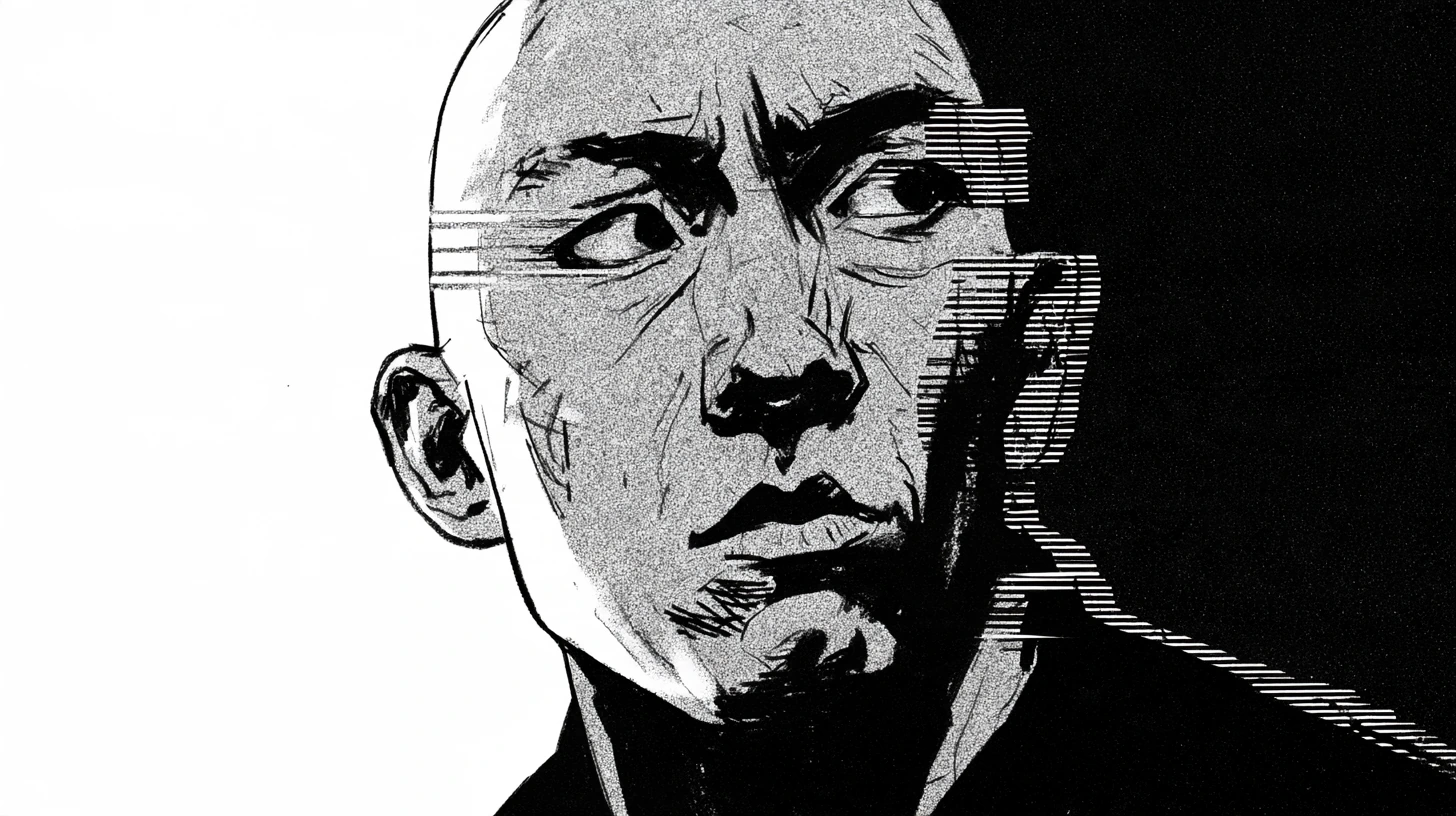
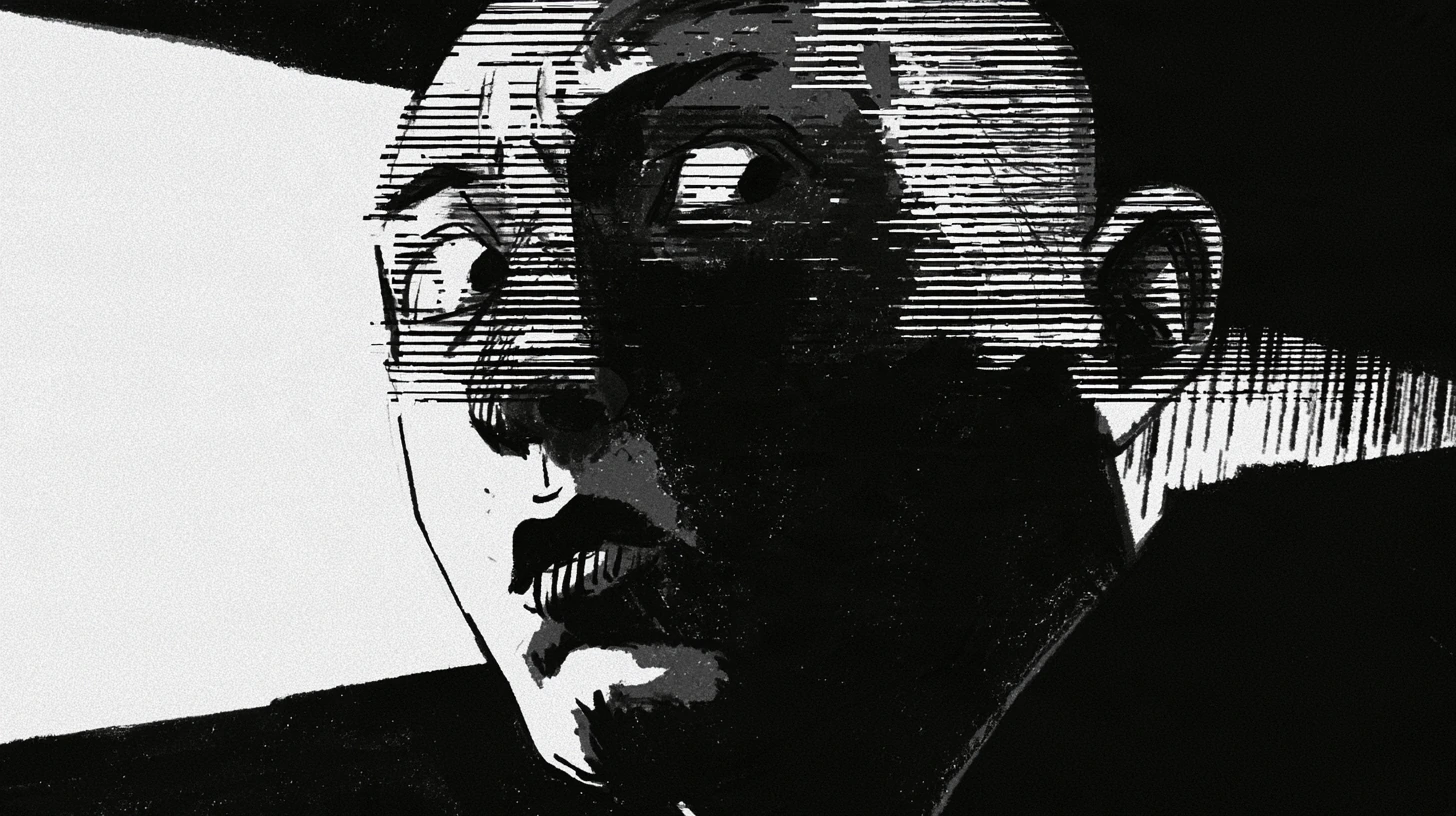
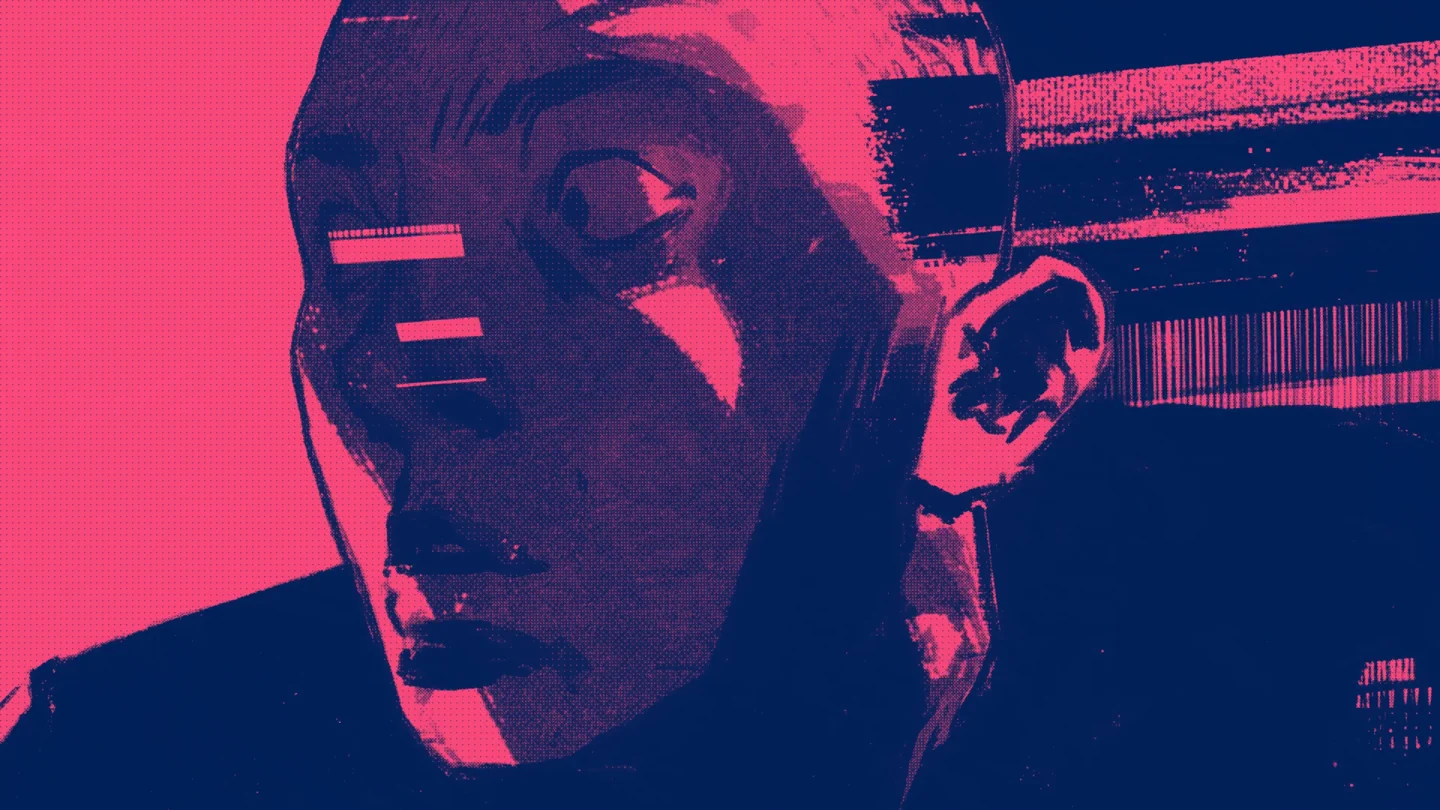
Patterns of light and shadow, dither and moving interference all shape the texture of the image. We are exploring how those patterns might signal intensity or unease while faces and gestures remain clear. Flat color follows the same ink structure.
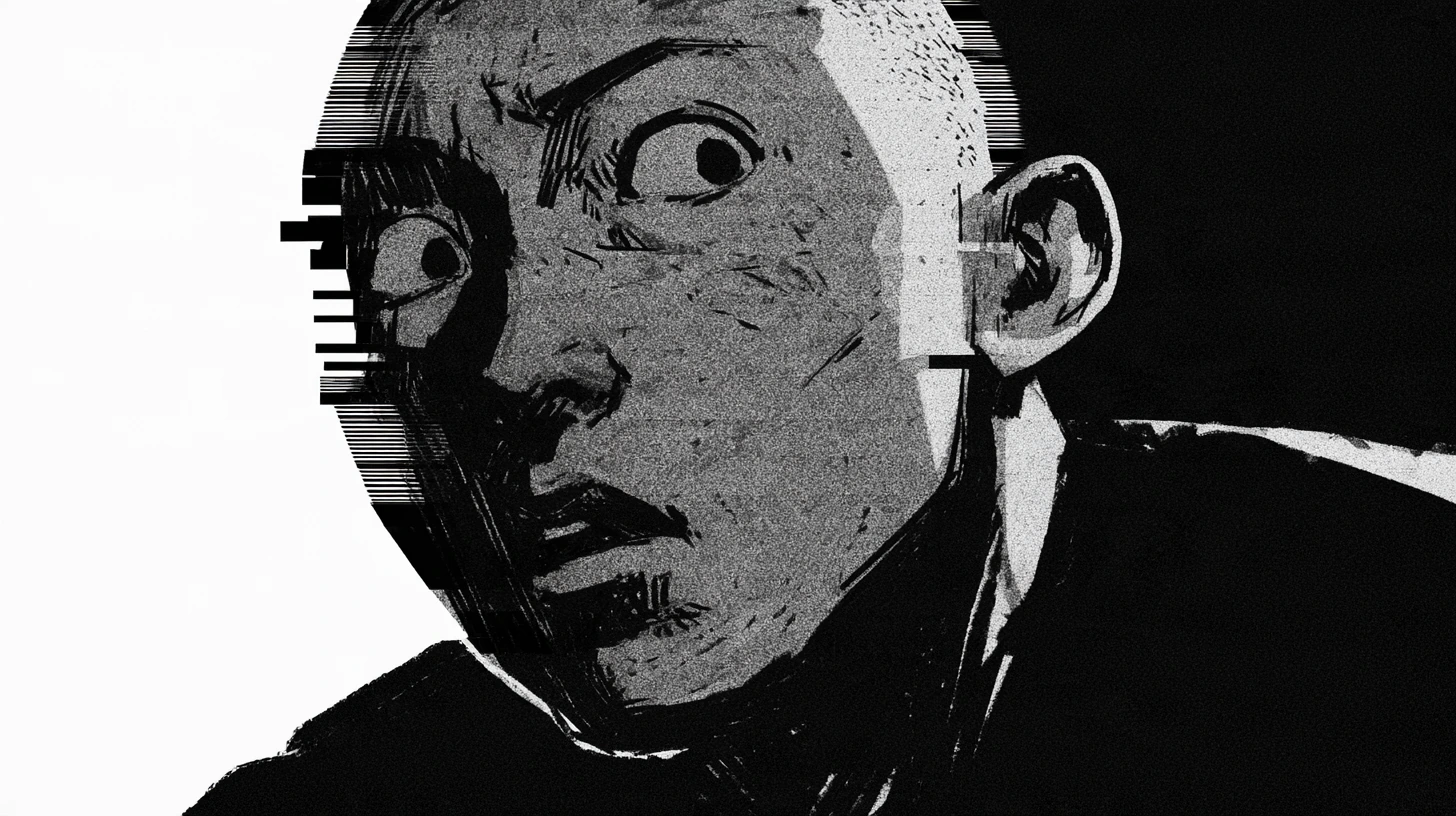
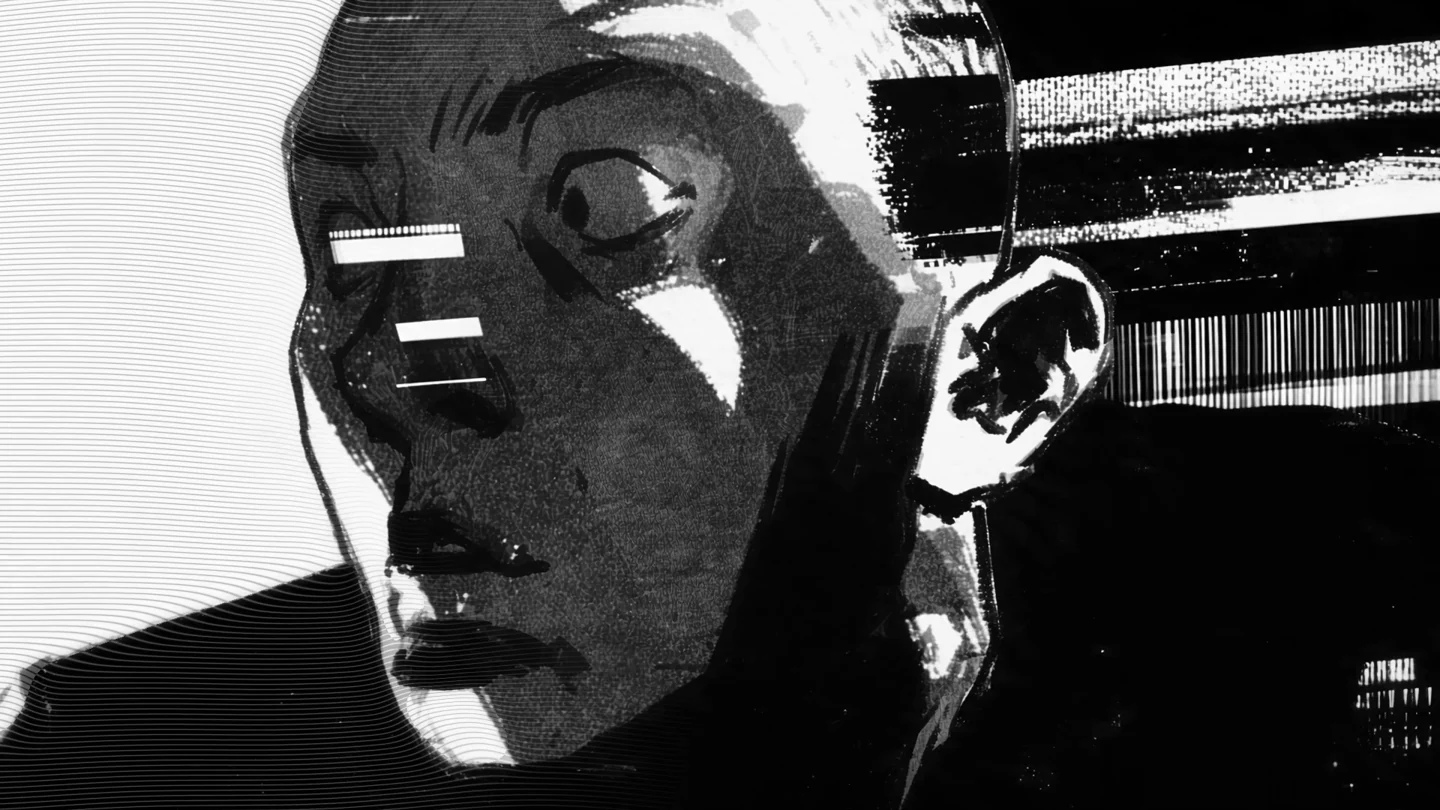
Video preview unavailable. Showing the study still.
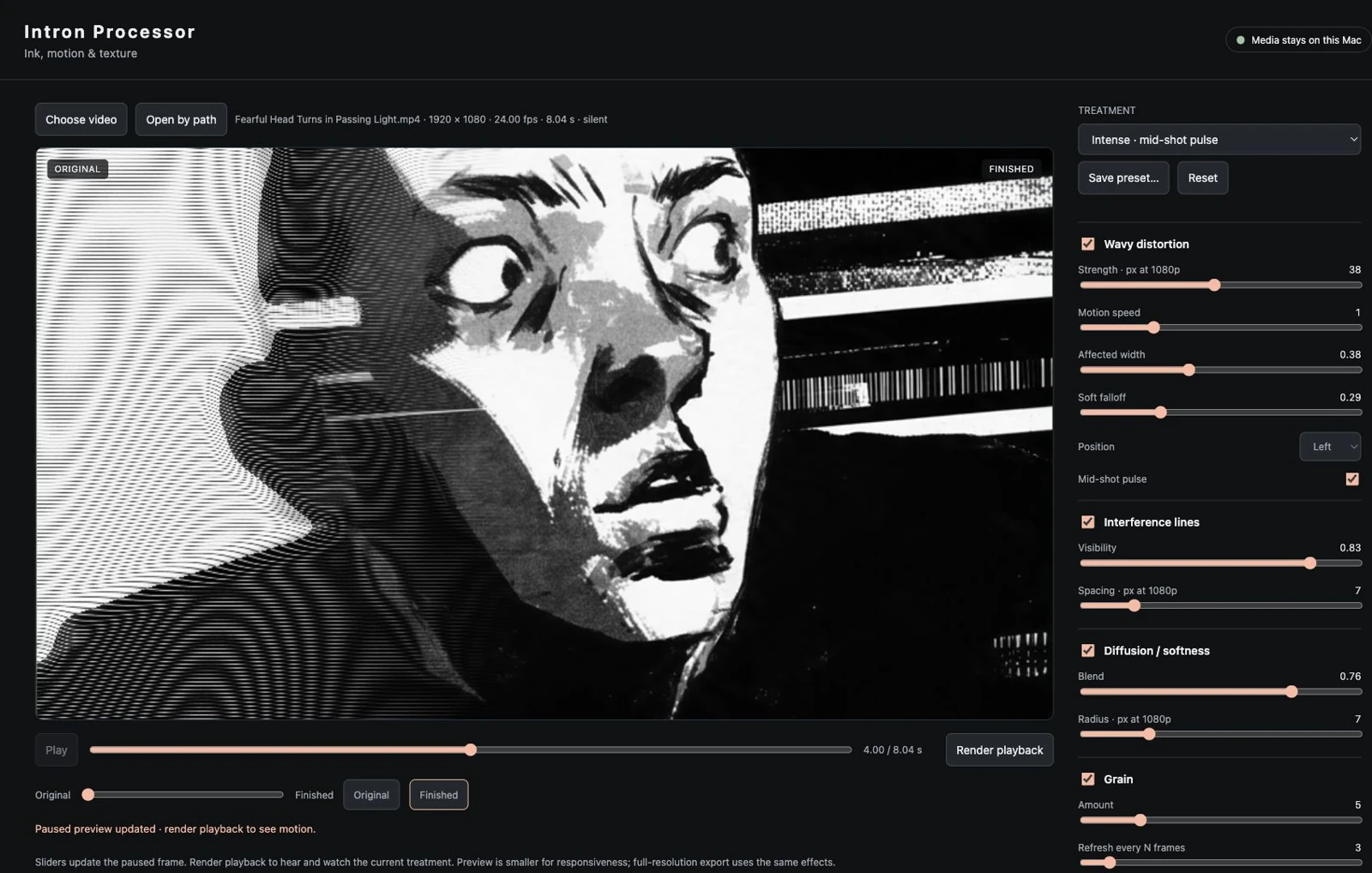
We experimented with building a video processor that adds a moving interference pattern, grain and local distortion to existing clips.
This Intense pass asks whether that disturbance can bring intensity or unease to a frame while the face and gesture remain readable.
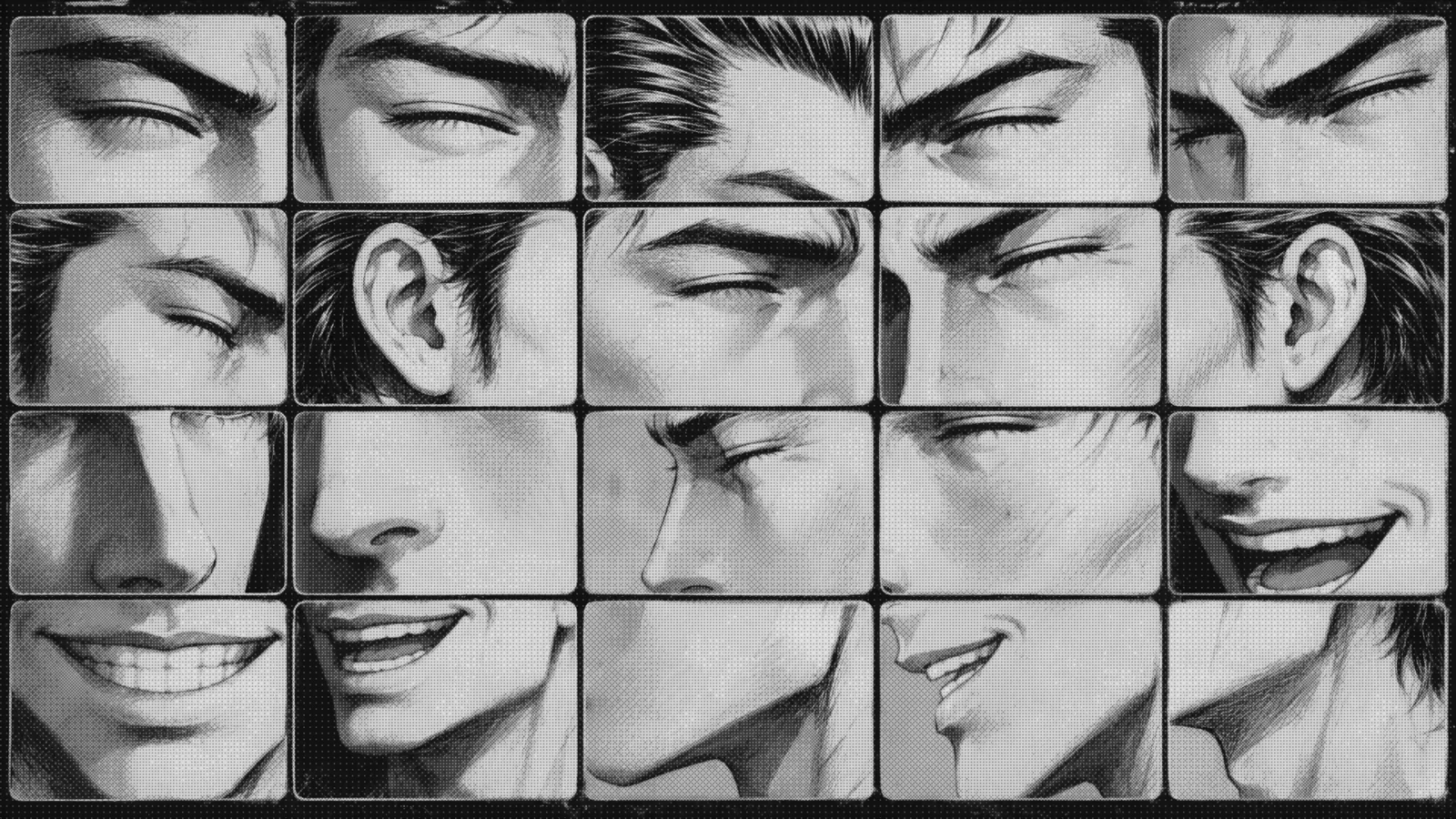
Video preview unavailable. Showing the study still.
The dithered finish introduces a patterned surface to the moving drawing. Across the eyes and mouths, we can judge how much texture the performance can carry before its expression becomes harder to read.
Video preview unavailable. Showing the study still.
If color enters the scene, the direction is broad, flat color applied across the existing light-and-dark structure. The ink continues to define the faces, forms and depth. Color becomes an expressive layer across the drawing rather than a detailed coloring of each object.
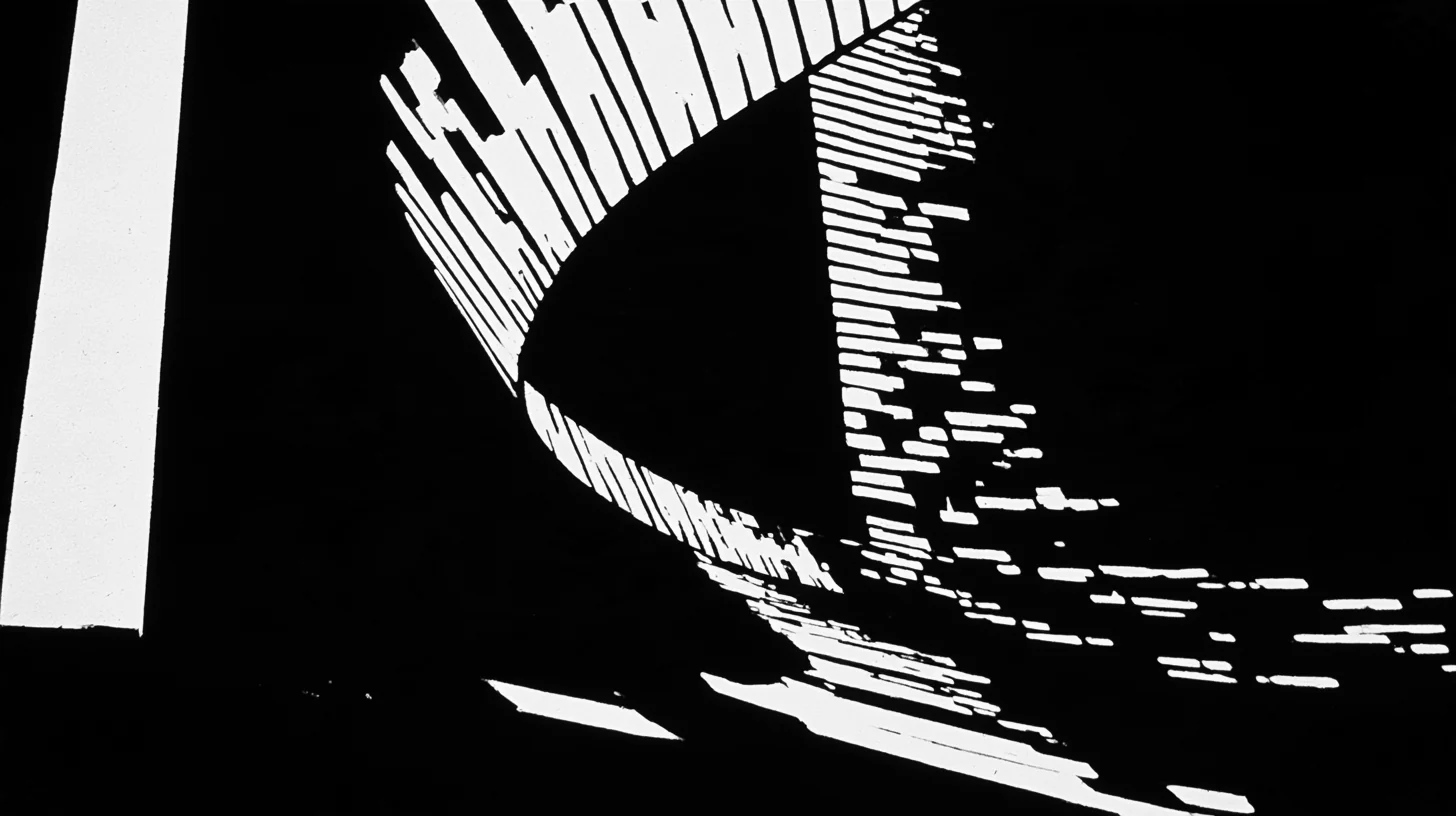
These background studies give the moving world its own vocabulary: solid light, broken rows, eroded edges and open darkness.
 Open full size ↗
Choose a plate to inspect it above. Use the arrows to move through the complete study.
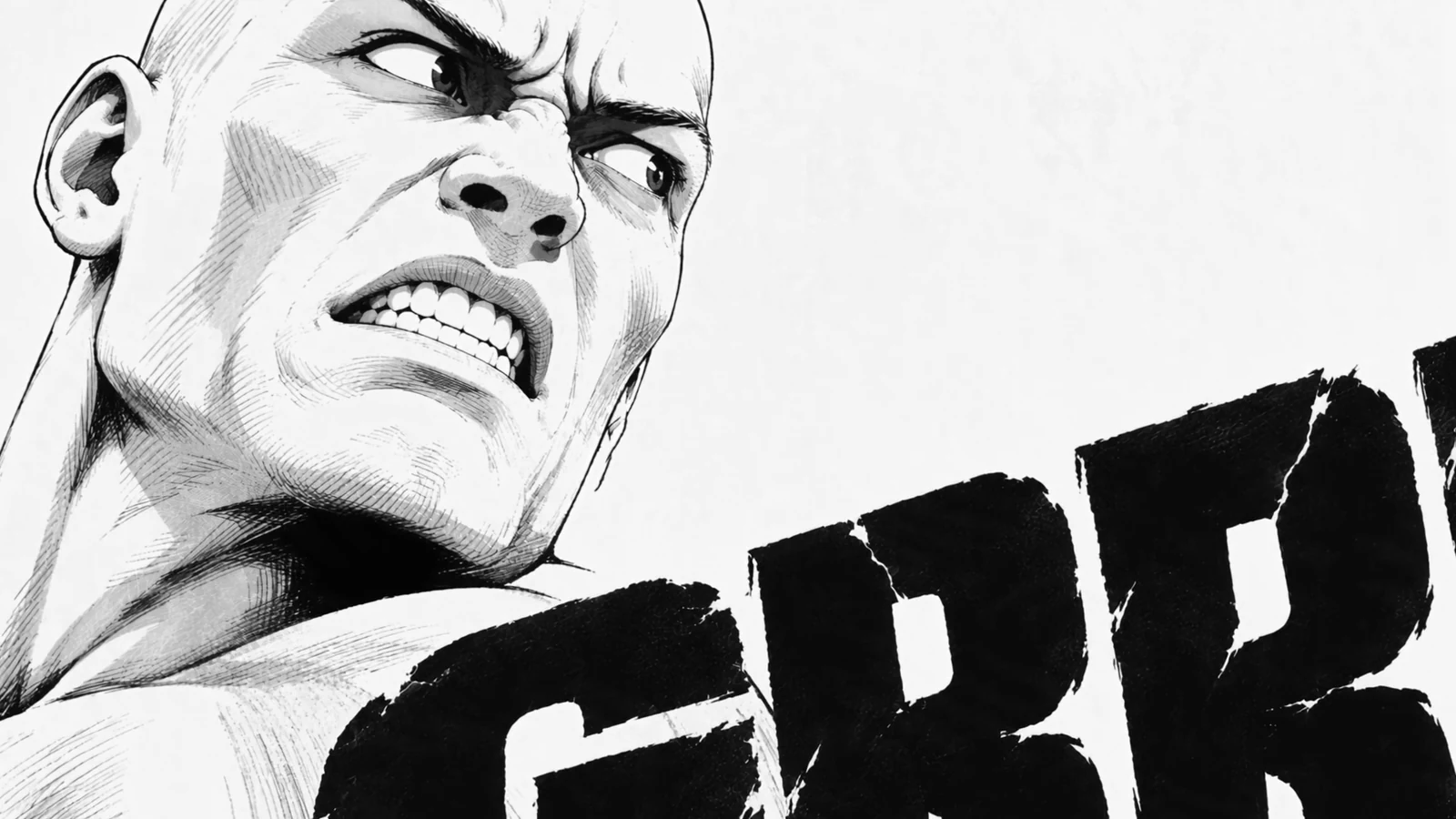
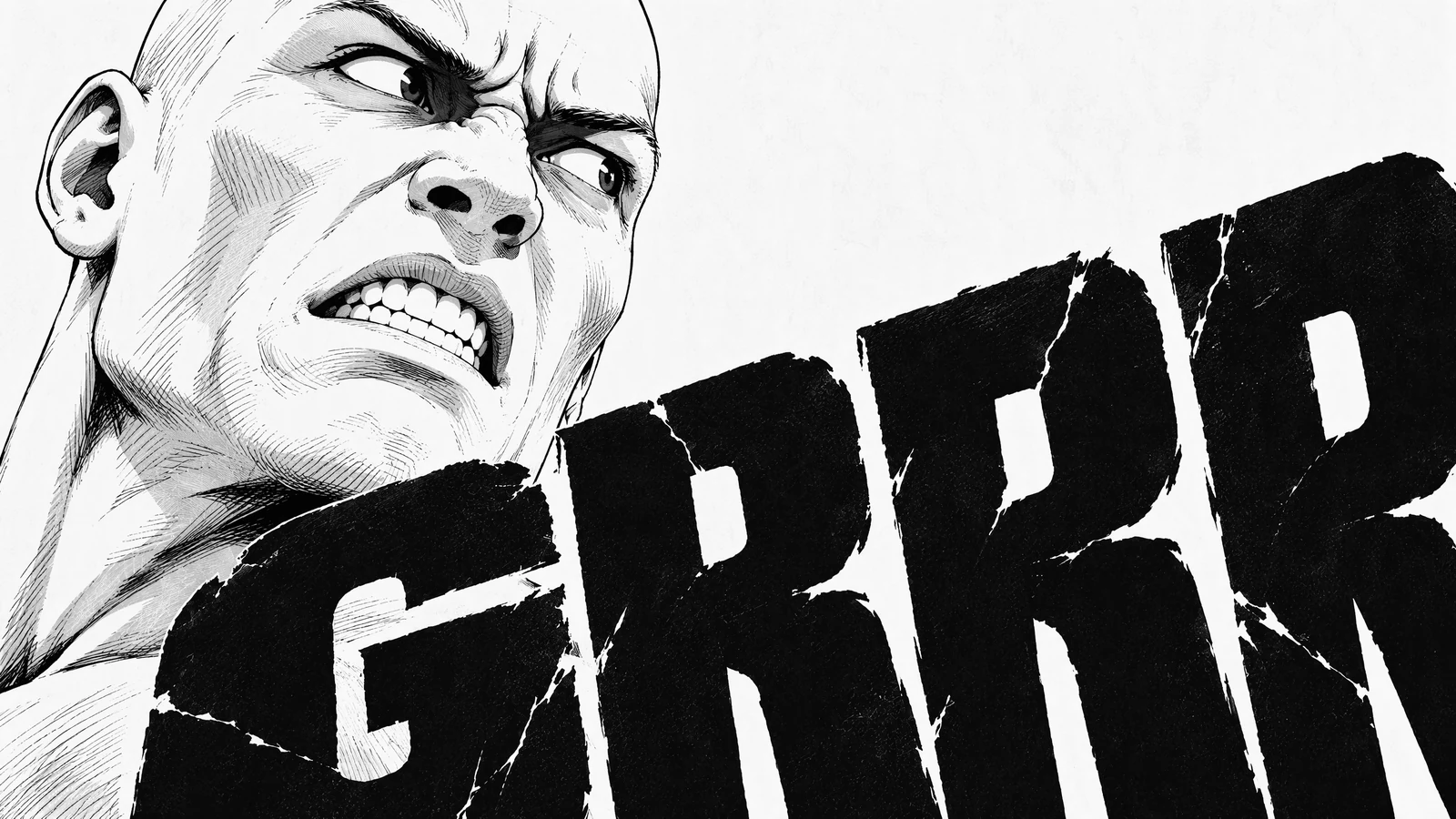
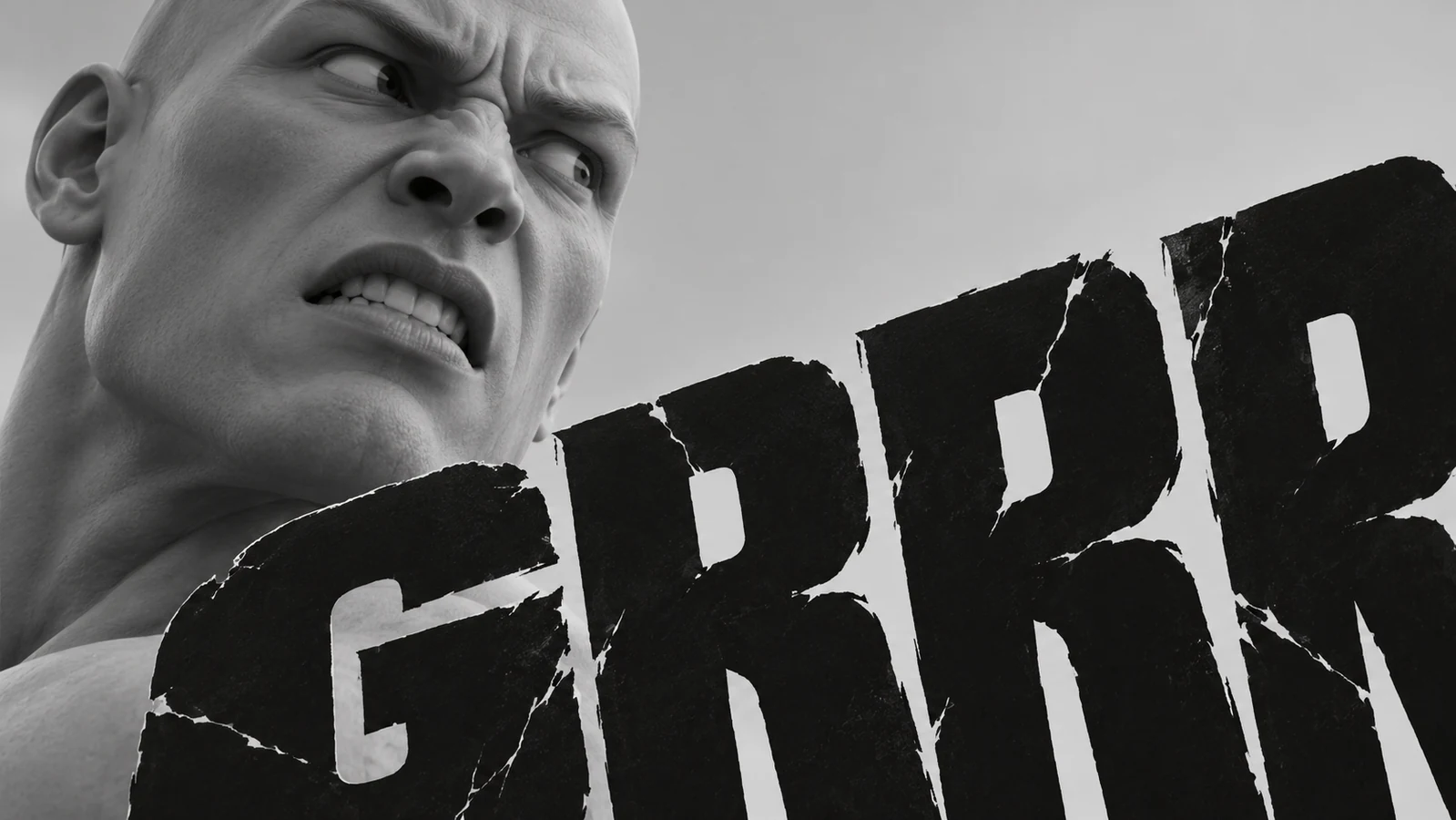
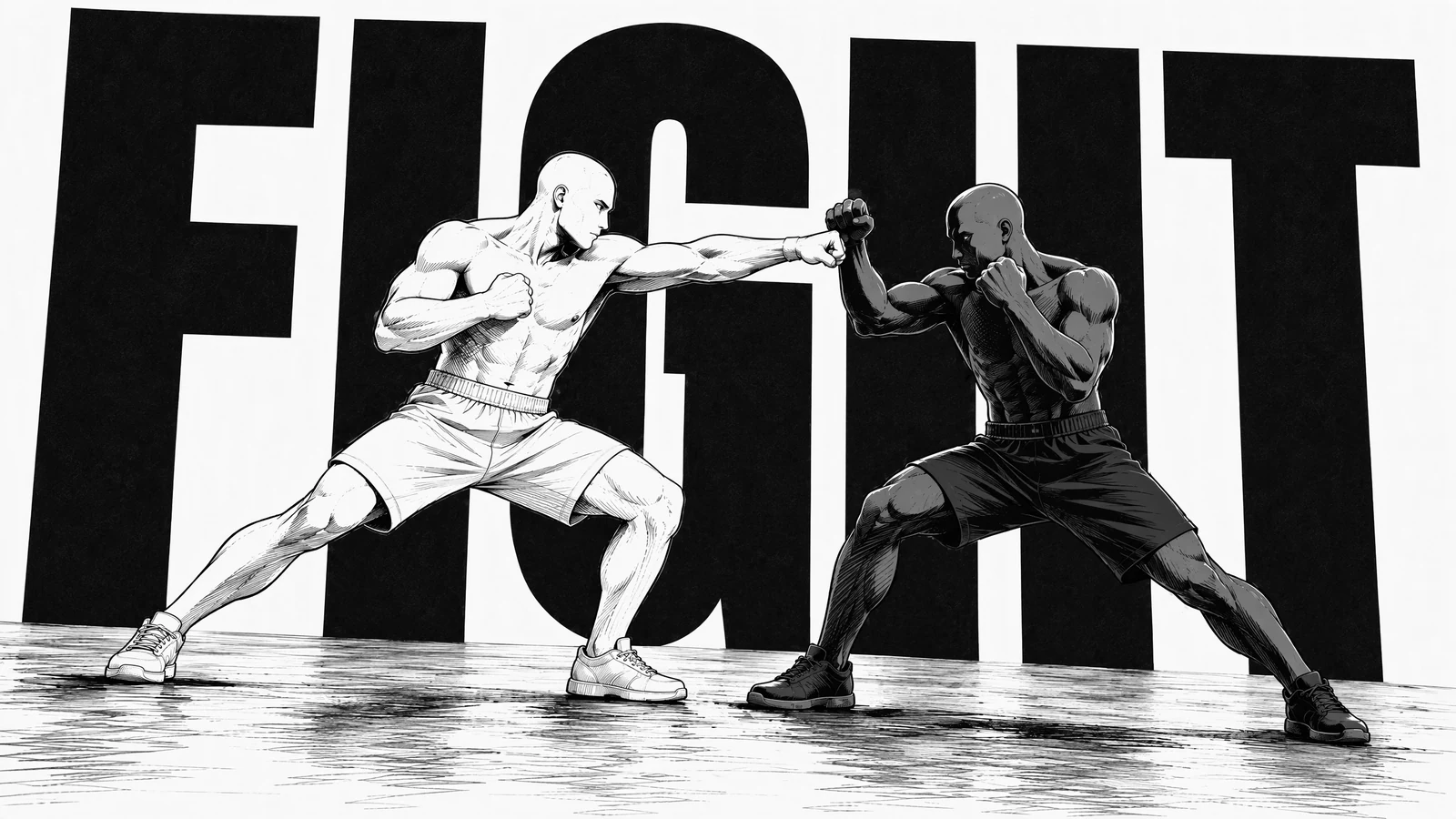
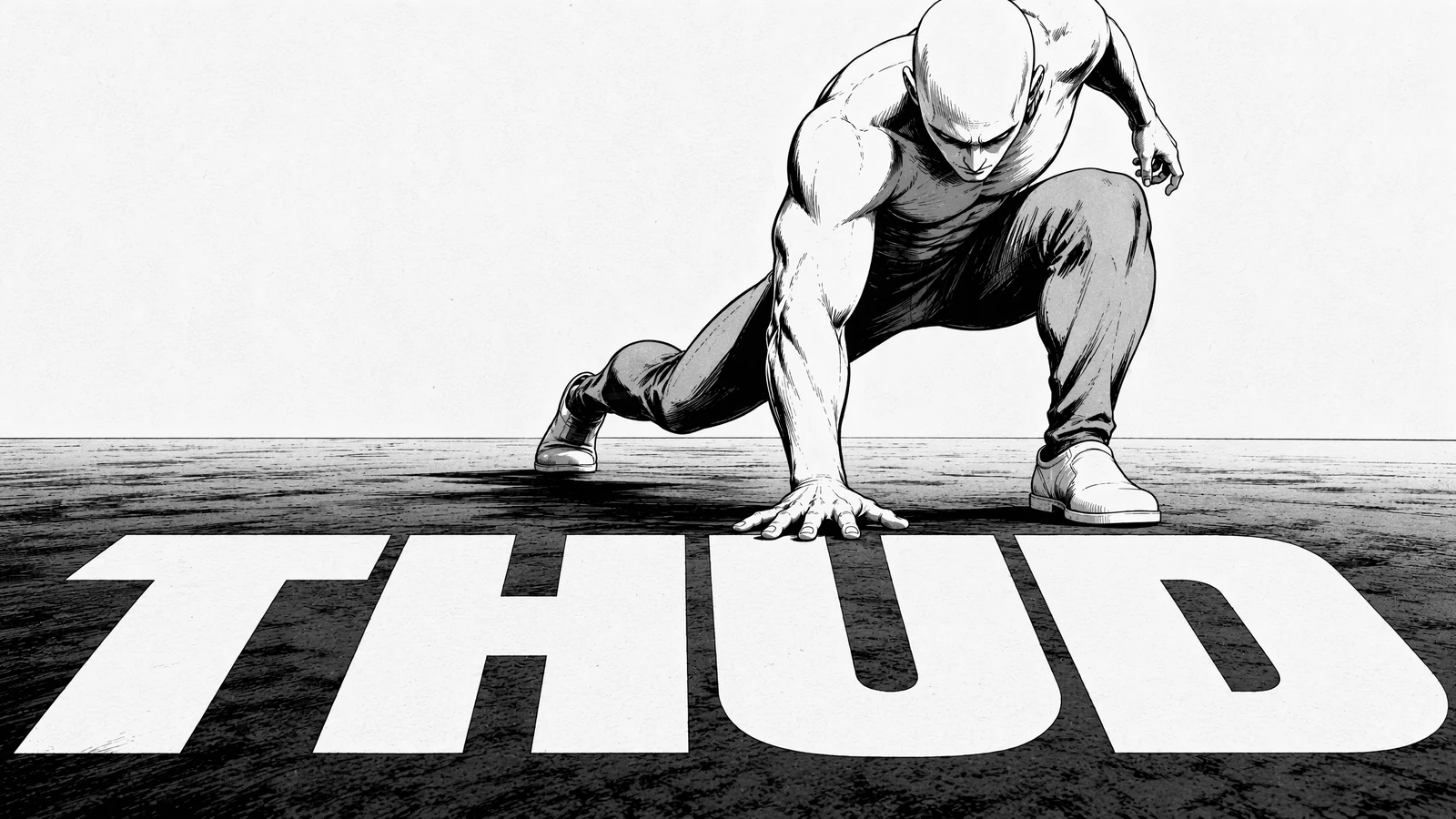
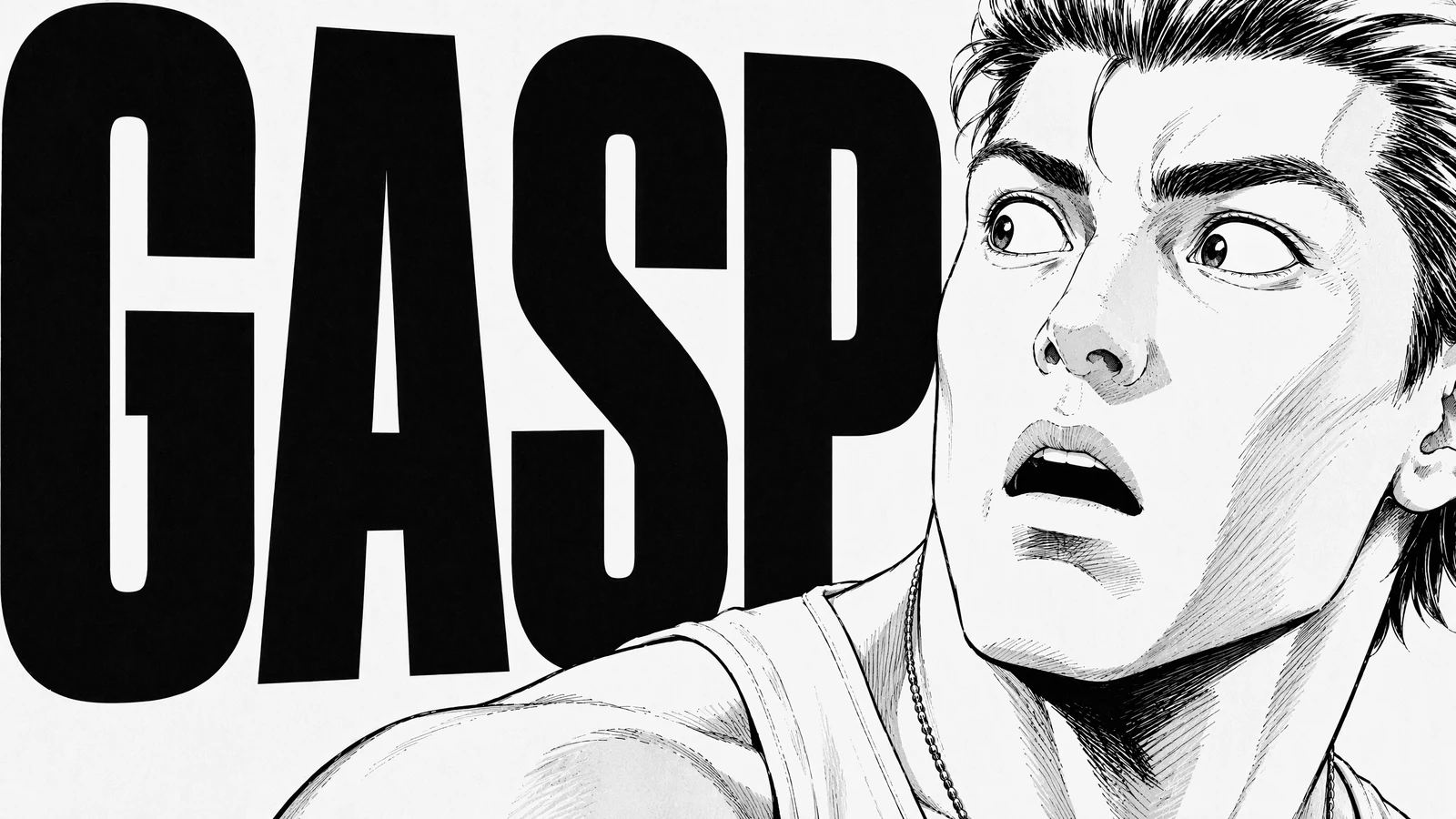
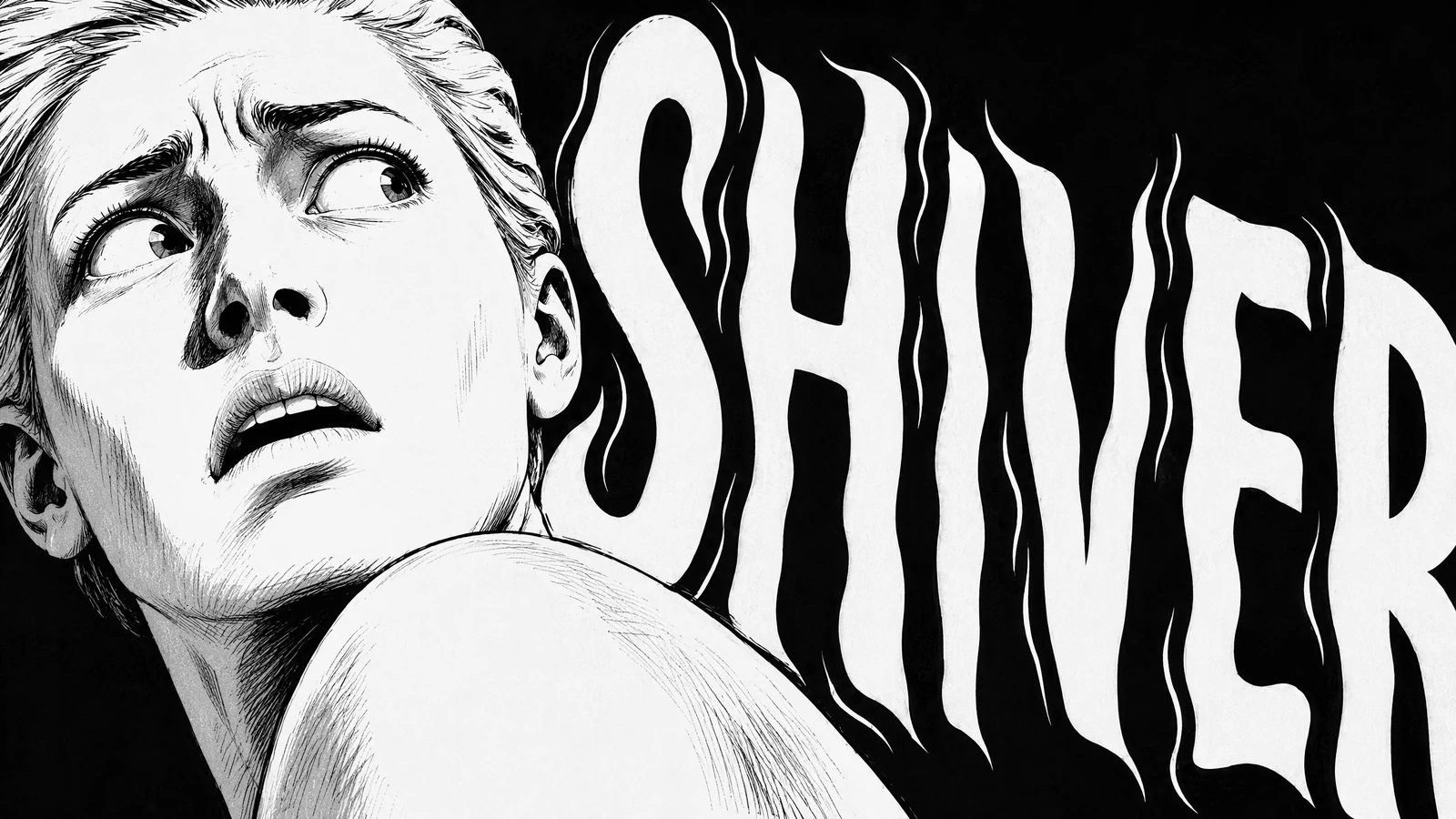
As part of this first manga exploration, we tried putting expressive text directly into scenes and into motion. These five plates test scale, placement and letterforms as cues for sound or emotion. It is a basic experiment, and whether it carries forward is still open.
Video preview unavailable. Showing the study still.
We explored the camera angle and volume in 3D, then translated the study into a graphic plate. The animation adds slow parallax and eases into a whole-frame shake, testing how the word and image might convey pressure together.
Music helped set the mood of this exploration: the glow of the city, the weight of the arena, and the uneasy space between them. These are listening references, not soundtrack selections for the finished film.
Warm melody and a steady groove. The city keeps moving around a held character, with a little loneliness beneath the late-night glow.
Low-end weight, degraded electronics and space between hits. A sudden silence can give a held pose or contact frame its force.
Melodic electronic music connects the two. A familiar groove can warp and lose definition, revealing the darker tension underneath.